There are certain wineries that completely change the way you think about a category. For me, VentiVenti is one of them.
Founded by brothers Andrea, Riccardo, and Tommaso Razzaboni alongside their father Vittorio, VentiVenti is a young, family-owned winery located in the northern area of Modena, Emilia-Romagna. What began as a vision has quickly become one of the most exciting names in modern Lambrusco, producing wines that balance tradition, sustainability, and innovation while remaining deeply connected to their terroir. The estate encompasses approximately 30 hectares of vineyards planted primarily to native varieties including Lambrusco di Sorbara, Lambrusco Salamino di Santa Croce, Ancellotta, and Pignoletto.
 Before our recent virtual tasting, I admittedly couldn’t wait. The winery had generously sent two bottles of each wine, and my curiosity got the better of me. Thankfully, that meant I had plenty of time to enjoy these wines both before and during the Zoom experience, where we were virtually transported into the vineyards of Modena itself.
Watching the team walk through the vines, discuss their philosophy, and showcase the beauty of the region only deepened my appreciation for what they’re doing.
One of the most fascinating aspects of VentiVenti is their vineyard philosophy. The estate is organically farmed and built around a commitment to sustainability and minimal intervention. Rather than forcing the vineyard to conform to a rigid formula, the team adapts each season to what the vines need. Canopy management, crop load, and vineyard decisions are made year by year with the goal of producing lower yields and higher quality fruit. Their focus remains on vine health, balance, and allowing the land to express itself naturally.
The soils are particularly important. Comprised of roughly 45% clay along with silt and sand, these alluvial soils contribute both minerality and structure to the wines. The team believes that starting with exceptional fruit and healthy soils allows them to use very low levels of sulfites while still producing wines with freshness, longevity, and stability.
What I appreciate most is their balanced approach. They don’t necessarily identify with the “natural wine” movement, yet they share many of the same ideals. Their goal is not intervention for intervention’s sake, but rather producing wines that honestly reflect the vineyard with as little manipulation as possible.
The result? Mineral-driven wines with bright acidity, moderate alcohol, and remarkable freshness.
Beyond the Stereotype of Lambrusco… If you’ve only experienced inexpensive, sweet Lambrusco from decades past, VentiVenti offers a completely different perspective.
The winery specializes in showcasing the elegance and versatility of local varieties, particularly Lambrusco di Sorbara and Lambrusco Salamino di Santa Croce. These grapes are capable of producing wines with precision, freshness, and incredible food-pairing potential. Their portfolio spans Metodo Classico sparkling wines, Charmat-method Lambrusco, ancestral-method bottlings, and still wines.
Throughout the tasting, one thing became abundantly clear: Lambrusco deserves a permanent place at the dining table.
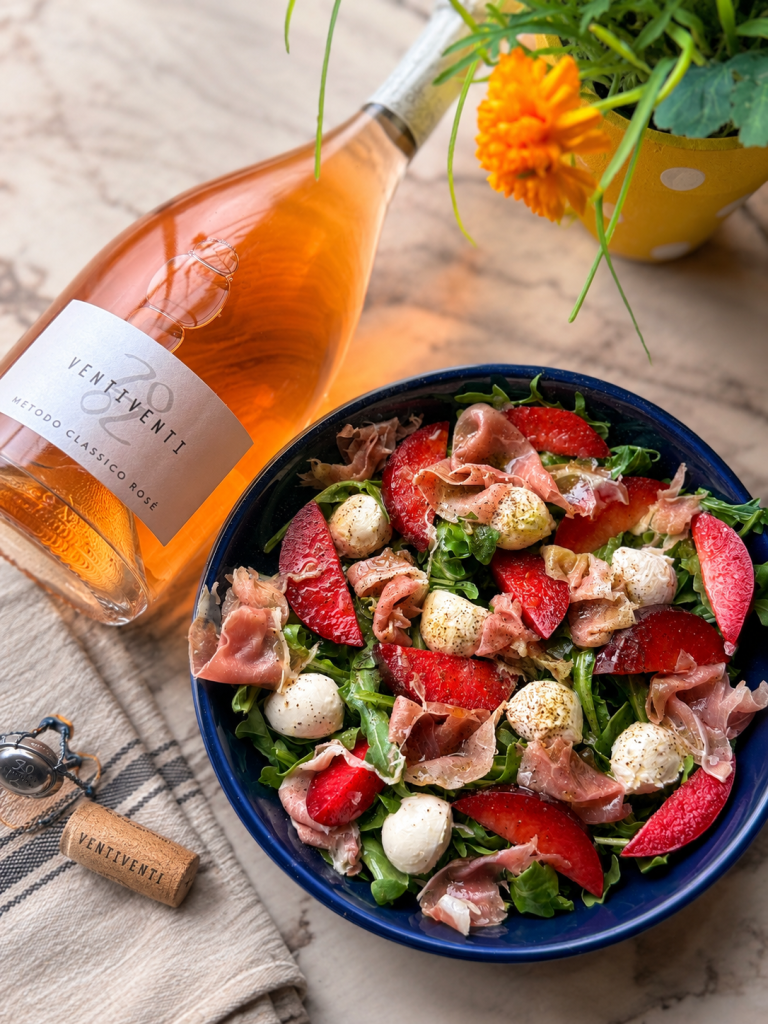
VentiVenti Metodo Classico Rosé: The first wine we explored was the winery’s stunning Metodo Classico Rosé. This wine perfectly embodies VentiVenti’s mission to elevate local grapes through traditional sparkling winemaking. Spending approximately 50 months on the lees and finished with only 3 grams of residual sugar, the wine delivers both elegance and complexity while remaining incredibly approachable. Extended aging contributes texture and depth, while maintaining remarkable freshness.
 In the glass, I found bright grapefruit notes alongside citrus, subtle red berry fruit, and lively acidity. The mousse is refined and persistent, creating a sparkling wine that feels sophisticated without losing its sense of joy.
For my pairing, I served it with an arugula salad featuring fresh mozzarella, prosciutto, ripe plums, rosé balsamic vinegar, and generous drizzles of premium extra virgin olive oil.
The pairing was a perfect example of why sparkling wines belong at the table. The wine’s bright acidity lifted the creamy mozzarella, while its citrus-driven freshness echoed the sweet-tart plum. The prosciutto added savory depth, and the olive oil tied everything together beautifully. Summer on a plate and in a glass.
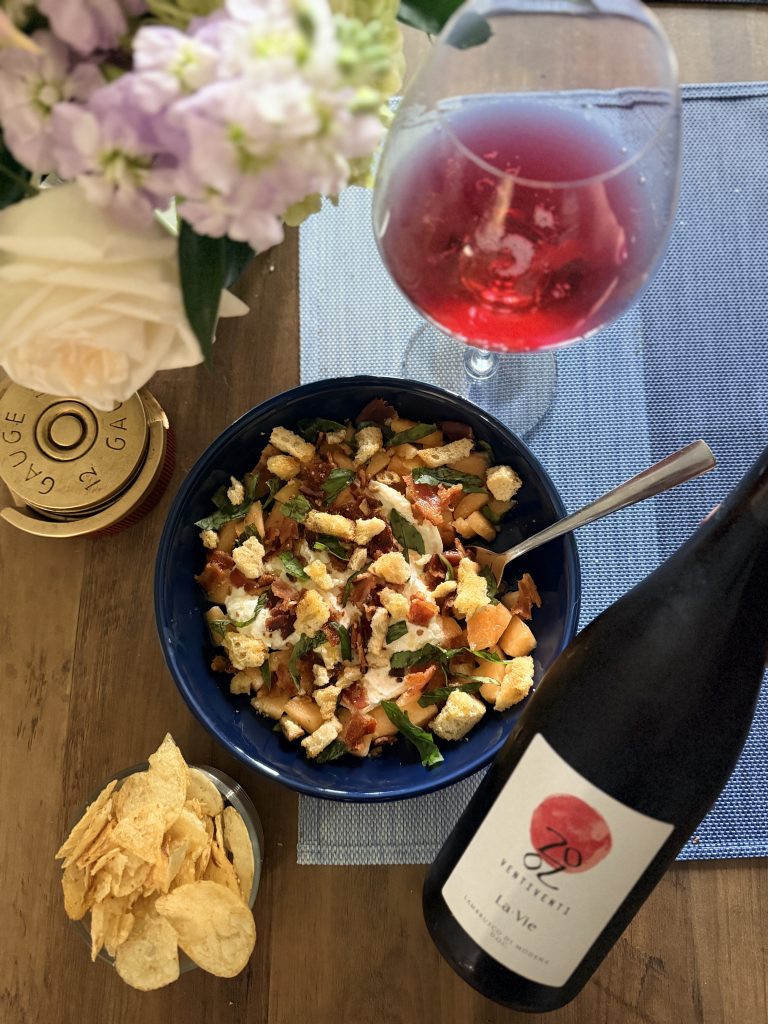
La Vie Lambrusco di Modena DOC: Next came La Vie, VentiVenti’s more traditional expression of Lambrusco. Produced using the Charmat method, La Vie was created after the winery realized they wanted to offer a classic interpretation of Lambrusco alongside their Metodo Classico program. While their sparkling wines remain a central focus, La Vie embraces the vibrant, approachable side of Lambrusco di Sorbara.
The wine spends approximately two weeks macerating on the skins, allowing color, flavor, and aromatic complexity to develop. The result is lively, fruit-forward, and incredibly food-friendly. I paired La Vie with burrata, melon, crispy pancetta, potato chips, and, naturally, a generous drizzle of excellent extra virgin olive oil. This combination was pure summer indulgence.
The creamy burrata softened the wine’s acidity, while the melon highlighted its fruit character. Salty pancetta and crunchy potato chips added contrast and texture, creating a pairing that danced between sweet, salty, creamy, and savory. Every bite invited another sip, and every sip invited another bite. It’s exactly the type of pairing that  reminds us wine doesn’t have to be complicated to be memorable.
Happy Selvaggio Ancestrale: My favorite surprise of the tasting may have been the Ancestrale. Bone dry, vibrant, and bursting with energy, this wine is produced in an ancestral style with virtually no residual sugar and extremely low sulfite levels. It delivers tart fruit, refreshing acidity, and an almost thirst-quenching quality that makes it incredibly drinkable.
This is the kind of wine that feels alive. I paired it with Asian-inspired barbecue cooked on my Blackstone, and the match was exceptional. The wine’s bright acidity cut through the richness of the barbecue while complementing the sweet-savory glaze. The tart character provided contrast, and the bubbles refreshed the palate after every bite.
It was one of those pairings where the wine doesn’t simply accompany the food, it elevates it.
As if the wine weren’t fun enough already, the bottle comes with one of twelve different labels. Several of us on the Zoom tasting had completely different versions, which sparked conversation and added another playful layer to the experience.
One aspect of VentiVenti that deserves special recognition is their commitment to inclusivity.
The winery works with individuals with developmental disabilities within their production operations, creating opportunities and fostering a culture that values people as much as products. In an industry that often focuses solely on what’s in the bottle, it’s refreshing to see a winery equally committed to the community around it.
Combined with their sustainable farming practices, organic certification, and family-centered approach, it reinforces the idea that great wine can be about more than just what ends up in the glass.
VentiVenti represents everything I love about modern Italian wine. They honor tradition without being trapped by it. They embrace sustainability without making it a marketing slogan. They produce wines that are serious enough for wine professionals yet approachable enough for everyday drinkers. Most importantly, they remind us that Lambrusco is not a category to overlook.
Whether it was the refined elegance of the Metodo Classico Rosé, the joyful food-friendliness of La Vie, or the energetic freshness of the Ancestrale, each wine offered a different perspective on what this historic region can achieve. One day I hope to visit Modena in person, stay among the vineyards, and experience VentiVenti firsthand.
Until then, these wines are a beautiful reminder that some of Italy’s most exciting discoveries are still hiding in plain sight.


Leave A Comment