 There are certain wineries that leave an impression because of the wines. Others stay with you because of the people. Talosa manages to do both.
During a recent zoom call, I had the opportunity to spend time with Cristian Pepi of Fattoria della Talosa, exploring one of the most fascinating historic cellars in Tuscany while tasting wines that showcase the elegance, longevity, and versatility of Vino Nobile di Montepulciano.
What struck me immediately was the sense of tradition. Not the kind of tradition that feels staged for visitors, but the kind that is woven into daily life.
As Christian explained, in his grandmother’s home, before the fork was placed on the table, before water was poured, wine came first. Wine was not reserved for celebrations. It was part of everyday life. The workers would begin their mornings with bread, prosciutto, and wine. Sunday lunch remains sacred, bringing generations together around the table where one bottle carries a family through bruschetta, pasta, roasted meats, and conversation.
That philosophy still defines Talosa today. Montepulciano is often confused with Montepulciano d’Abruzzo, but they are entirely different wines from entirely different regions.
Talosa sits in Tuscany, just a short drive from Umbria and roughly thirty minutes from Montalcino. The landscape is everything people dream of when they imagine central Italy, rolling hills, cypress-lined roads, ancient stone villages, and vineyards stretching across clay-rich soils.
The vineyards of Talosa are located in the Pietrose area of Montepulciano, between 350 and 400 meters above sea level. The south and southwest exposures provide excellent sunlight while the elevation helps preserve freshness and acidity. The soils are of Pliocene origin, a medium-textured mixture that contributes both structure and elegance to the wines.
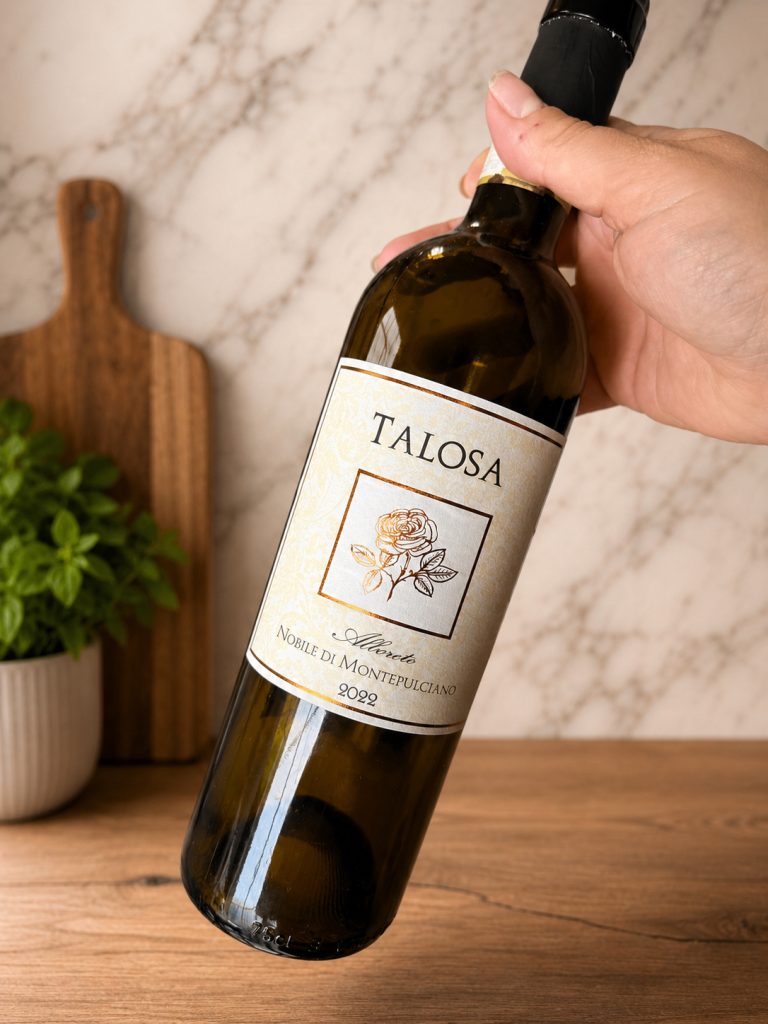
While Brunello often captures international attention, Vino Nobile di Montepulciano remains one of Tuscany’s great values. At its best, it delivers the perfume and acidity that Sangiovese lovers crave while maintaining a graceful, food-friendly personality that makes it remarkably versatile at the table.
One of the most interesting conversations during our visit centered around filtration. Talosa has spent years comparing filtered and unfiltered wines through blind tastings. Time after time, the team found themselves preferring the unfiltered versions. Their belief is simple: every intervention removes something. By minimizing filtration, they preserve aromatics, texture, and the character of the vineyard itself.
It is a philosophy that aligns beautifully with their approach to aging. Rather than masking Sangiovese with heavy new oak, Talosa focuses on preserving the grape’s natural aromatic profile.
As Christian explained, Sangiovese is delicate. The goal is not to overwhelm it, but to allow it to speak. One of the highlights of the visit was descending into Talosa’s historic aging cellar, located beneath Montepulciano’s medieval center between Palazzo Tarugi and Palazzo Sinatti.
The cellar feels almost cathedral-like, carved into the ancient underground spaces of the city. Massive oak casks line stone corridors that have quietly aged wine for generations. Talosa actually operates three separate cellars, each serving a specific purpose. The first handles vinification and the production of Vin Santo near the vineyards. The second focuses on barrel aging, bottle storage, and logistics. The historic underground cellar serves as the home for aging wines in large casks, creating one of the most memorable winery experiences in Tuscany.
And yes, there were oyster shells everywhere, a fascinating reminder of the marine origins found throughout parts of Tuscany’s ancient geological history.
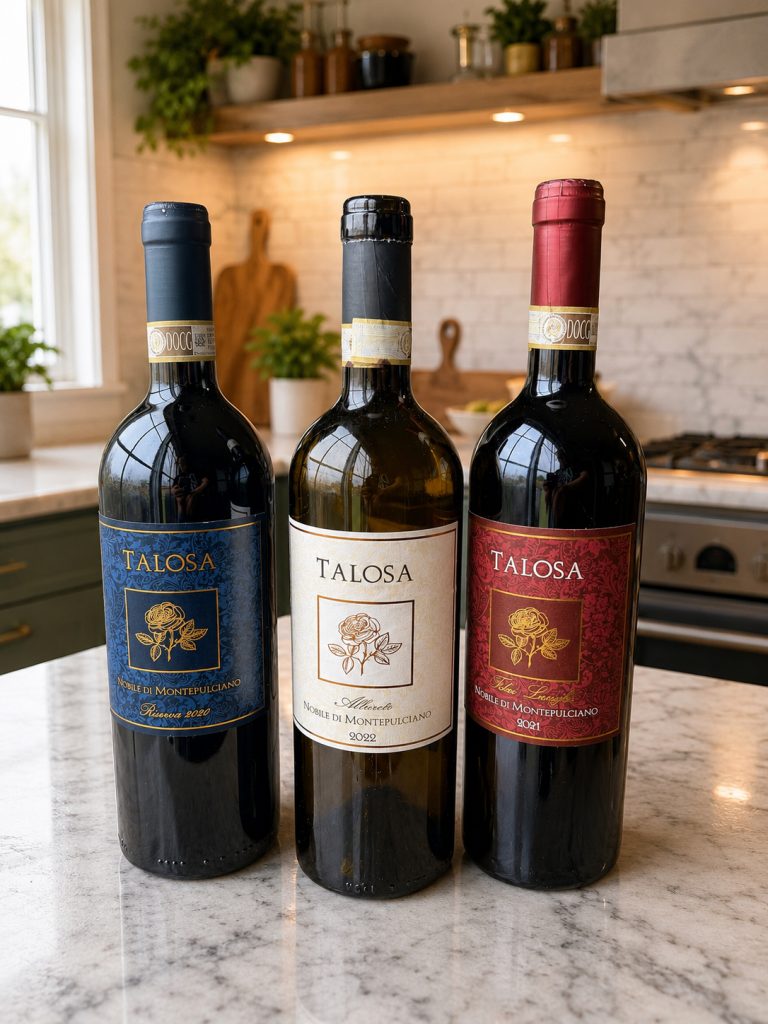
Wine 1: Vino Nobile di Montepulciano DOCG: The first wine showcased exactly why Vino Nobile deserves more attention.
Produced entirely from Sangiovese grown in the Pietrose vineyards, the wine comes from south and southwest-facing sites planted on clay-rich Pliocene soils. Yields are intentionally kept low at approximately 4,000 kilograms per hectare. The result is a wine with impressive aromatic lift, bright red cherry fruit, floral notes, savory herbs, and remarkable balance. What I loved most was its versatility. This is the kind of wine that can move effortlessly from a simple bruschetta topped with fresh olive oil to a rustic pasta dish or grilled meats.
Even with its approachability, Talosa estimates an aging potential of ten to fifteen years, proving that elegance and longevity can coexist.
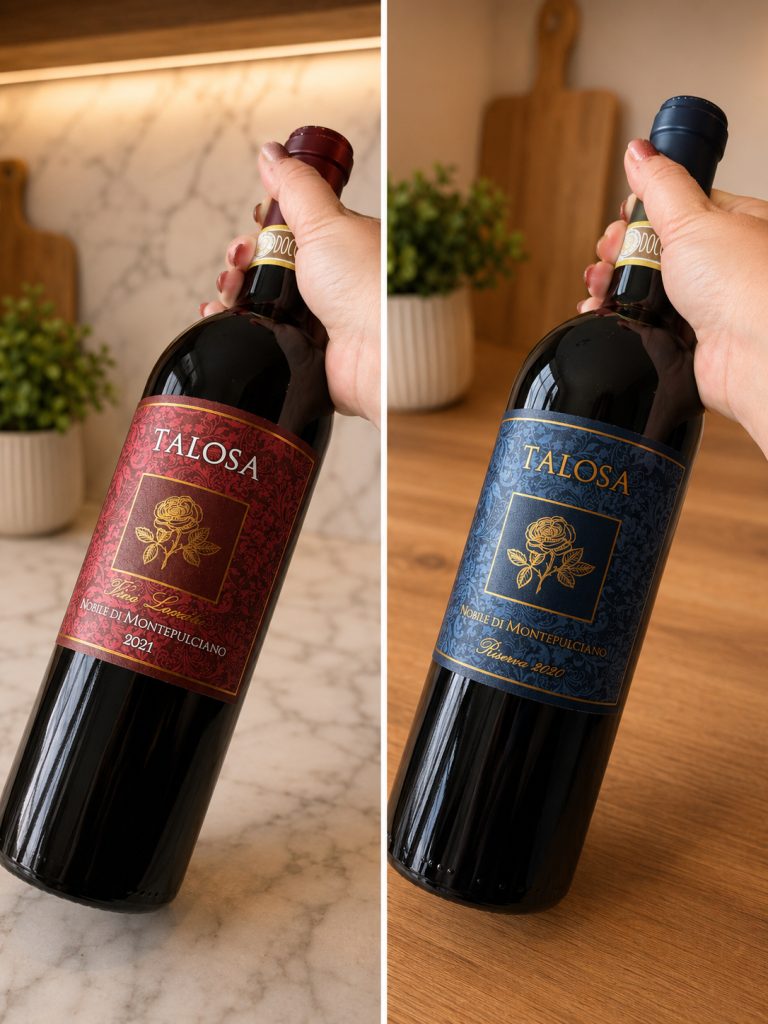
Wine 2: Vino Nobile di Montepulciano Riserva DOCG: If the classic bottling represents everyday Tuscan life, the Riserva is the wine for special occasions. This was Christian’s favorite pairing with wild boar and game meats, and after tasting it, I completely understood why. The wine undergoes a long fermentation of approximately twenty to twenty-five days before maturing for roughly three years through a combination of tonneaux, large casks, and stainless steel. Following DOCG regulations, it also spends a minimum of six months in bottle before release. The aging regimen is carefully managed to avoid excessive oak influence. Instead of relying on heavy new French oak, Talosa focuses on preserving the complexity and aromatic purity of Sangiovese.
The result is a wine layered with dark cherry, dried herbs, leather, forest floor, spice, and incredible depth. This is a bottle that rewards patience, with a lifespan that easily exceeds fifteen years.
Wine 3: Filai Lunghi: Perhaps the most intriguing wine of the tasting was Filai Lunghi. Produced in limited quantities, often around 8,000 bottles depending on the vintage, this wine reflects Talosa’s commitment to showcasing vineyard character. Following fermentation in temperature-controlled stainless steel tanks, the wine spends approximately two years maturing through a combination of tonneaux, large casks, and stainless steel before additional bottle aging prior to release.
Christian spoke passionately about the importance of bottle aging, explaining that after oak has done its job, the wine still needs time to understand itself. Bottle age allows the components to integrate in a way that neither stainless steel nor concrete can fully replicate. The wine was beautifully structured, combining power and elegance while maintaining the vibrant energy that defines great Sangiovese.
What makes Talosa special is not simply their historic cellar, impressive vineyards, or age-worthy wines. It is their commitment to preserving the identity of Montepulciano. In a world where many wineries chase trends, Talosa continues to focus on authenticity. They trust their vineyards. They respect the character of Sangiovese. They embrace patience. And they understand something that every great wine region eventually learns:
Wine is not just a beverage. It is culture. It is family. It is Sunday lunch. It is the first thing placed on the table.
And after spending time with Christian Pepe and the Talosa team virtually, it became clear that this philosophy remains alive and well in Montepulciano. I hope to visit the winery one day, and I hope you can taste these incredible wines too. Always remember, eat what you like and drink what you love, please pair responsibly!


Leave A Comment