
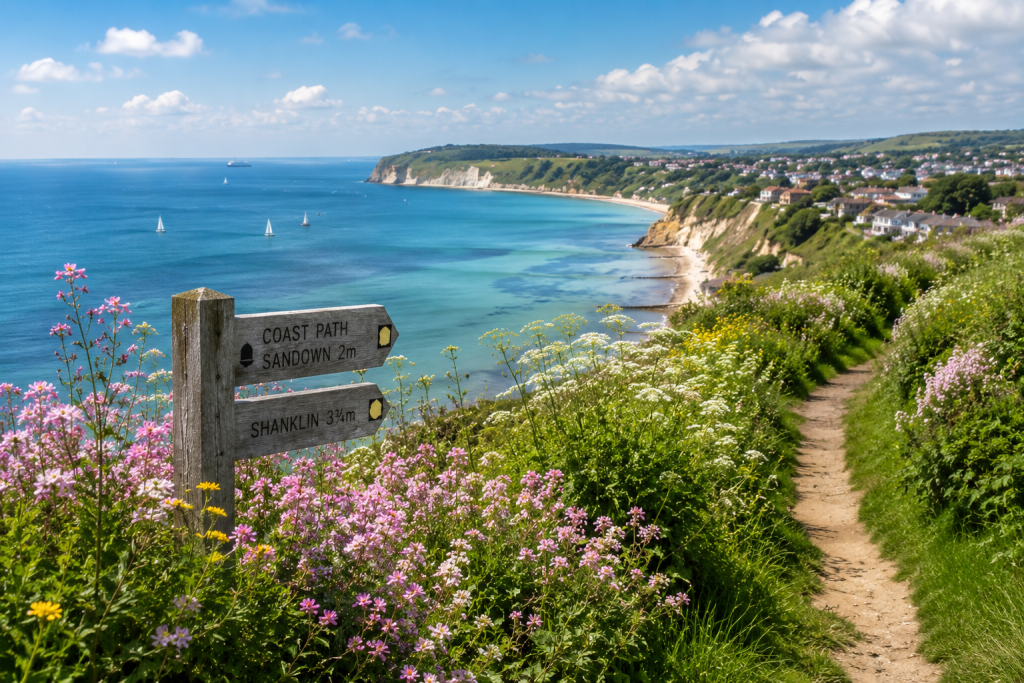
 The Isle of Wight may be better known for its beaches, sailing and dramatic coastal scenery, but there is another side to the island that is increasingly worth discovering: its wine.
Southern England’s growing reputation for wine has encouraged travellers to look beyond the established vineyard regions of Sussex and Kent. On the Isle of Wight, wine tasting comes with an additional advantage. A vineyard visit can easily be combined with coastal walks, country pubs, historic villages and a leisurely weekend by the sea.
Begin the Trip Across the Solent
Part of the appeal of an Isle of Wight wine weekend is that the journey itself feels like the beginning of a holiday.
Visitors bringing a car can travel with Wightlink from Portsmouth to Fishbourne or from Lymington to Yarmouth. The Portsmouth–Fishbourne crossing takes around 45 minutes, while Lymington–Yarmouth takes approximately 40 minutes. Foot passengers can also use Wightlink’s Portsmouth Harbour–Ryde FastCat service.
For a vineyard-focused trip, bringing a car can be particularly useful, although anyone planning on tasting several wines should arrange a designated driver, taxi or overnight accommodation.
Adgestone Vineyard: The Essential Wine Stop
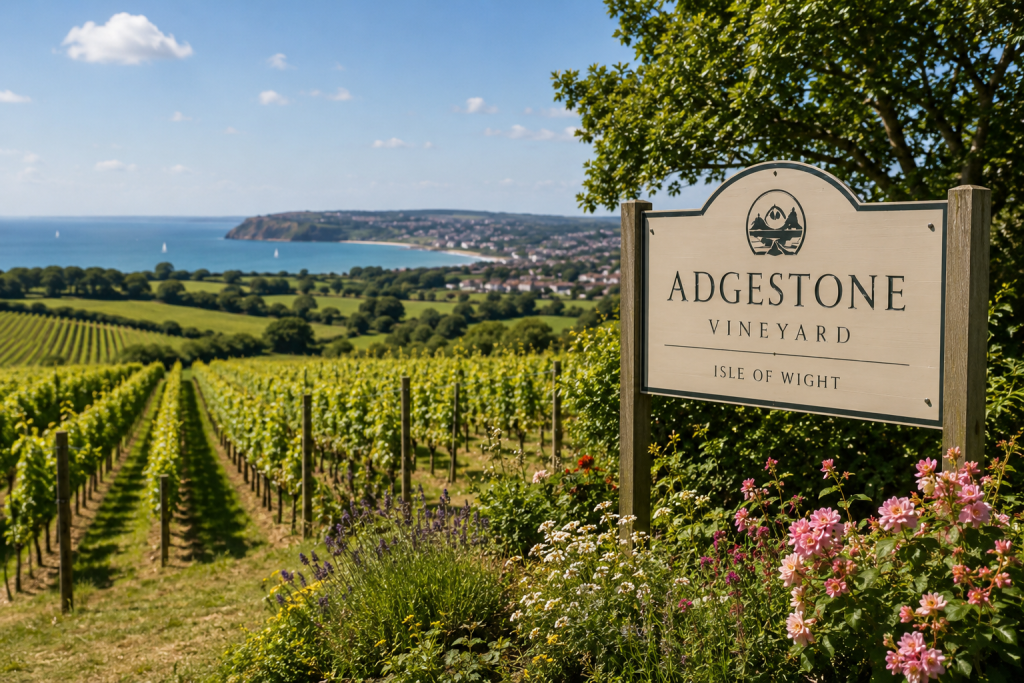 The centrepiece of any Isle of Wight wine tour is Adgestone Vineyard, situated in the countryside between Sandown and Brading.
Rather than simply operating as somewhere to buy locally produced wine, Adgestone offers the full vineyard experience. Visitors can walk among the vines, learn about the growing and winemaking process and descend into underground wine cellars.
The vineyard covers around ten acres and grows several grape varieties suited to the English climate. Its visitor experiences include vineyard tours and wine-tasting sessions, while a café provides somewhere to turn the visit into a relaxed afternoon rather than a quick stop.
It is precisely the kind of vineyard that makes wine tourism enjoyable for people who aren’t experts. You don’t need to arrive knowing the difference between Seyval Blanc and Schönburger; discovering the grapes and wines is part of the experience.
Make It a Slow Afternoon
One mistake with a wine trip is trying to fit too much into a single day.
The Isle of Wight is particularly suited to slow travel, so consider making the vineyard the main event rather than one attraction among ten.
Arrive late morning, explore the vines and cellars, have lunch and taste some of the estate’s wines. You can then spend the remainder of the afternoon exploring the eastern side of the island.
Nearby options include Brading, one of the island’s oldest towns, or the beaches around Sandown and Shanklin.
The contrast is part of the appeal: vines and rolling countryside at lunchtime, followed by a walk beside the sea a few hours later.
Turn Wine Tasting Into a Weekend
A two-night trip works particularly well.
Day One: Arrive and Explore
Take a morning ferry to the island and spend the afternoon getting settled.
If arriving through Fishbourne, you are conveniently positioned for much of central and eastern Wight. Those travelling via Yarmouth instead arrive directly into the atmospheric West Wight, making it tempting to begin with lunch around Yarmouth before driving east. Wightlink describes Fishbourne as particularly convenient for East and Central Wight, while Yarmouth provides direct access to the western side of the island. (Wightlink)
Day Two: Vineyard Day
Give Adgestone the middle of your day rather than squeezing it in first thing.
Enjoy a vineyard tour, discover how the grapes are grown and sample some Isle of Wight wine. Afterwards, explore Sandown Bay or continue towards Shanklin.
Finish with dinner somewhere serving local seafood or other island produce.
Day Three: West Wight and Home
Use the final morning for a completely different side of the island.
Head west towards Freshwater, Totland and Alum Bay, or simply wander around Yarmouth before catching the ferry back to Lymington.
That makes the weekend feel more like a miniature road trip than a single-purpose wine excursion.
Wine, Seafood and Island Produce
Wine tourism tends to be most enjoyable when it becomes part of a broader food trip.
The Isle of Wight is well suited to that approach. Instead of treating a vineyard tasting as an isolated attraction, build the weekend around local produce.
Look for menus featuring Isle of Wight tomatoes, locally caught fish and seafood, cheeses and seasonal ingredients. Then compare the wines you’ve tasted at the vineyard with the food being served elsewhere on the island.
It turns wine tasting from an activity into a way of exploring the destination.
When Should You Visit?
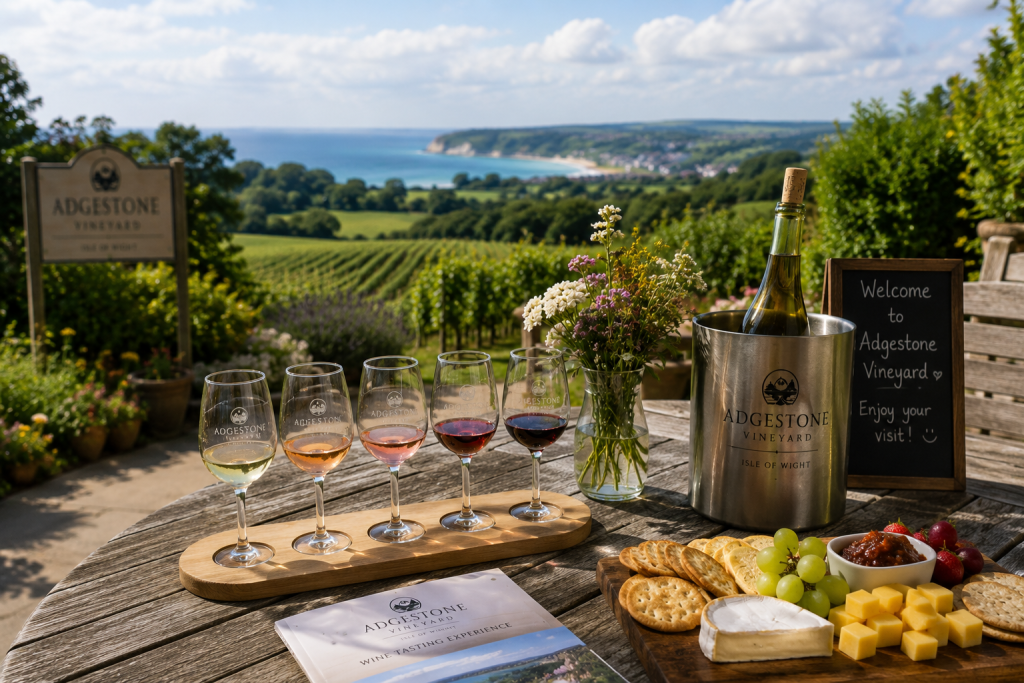 Late spring through early autumn is the obvious period for combining vineyards with the rest of the Isle of Wight.
Summer offers long evenings and the best opportunity to combine wine tasting with beaches and outdoor dining. Adgestone also hosts live music on many summer weekends.
Early autumn has a different atmosphere. Vineyards are approaching or entering harvest season, the countryside begins to change colour and the busiest summer tourism period starts to subside.
Whichever month you choose, check vineyard opening times and tasting availability before travelling.
Don’t Rush Back to the Mainland
Perhaps the best thing about an Isle of Wight wine tour is that it doesn’t feel like visiting a conventional wine region.
There are no endless rows of estates competing for attention. Instead, wine becomes one part of a weekend containing ferry journeys, sea views, old villages, beaches and country roads.
You might spend the afternoon learning how grapes are grown on an English hillside, drink a glass of locally produced wine overlooking the countryside and find yourself walking beside the sea before dinner.
And when it is finally time to head home, there is still the ferry journey across the Solent.
For anyone looking for a slightly different British food-and-drink break, that combination makes the Isle of Wight surprisingly difficult to beat.




Leave A Comment