
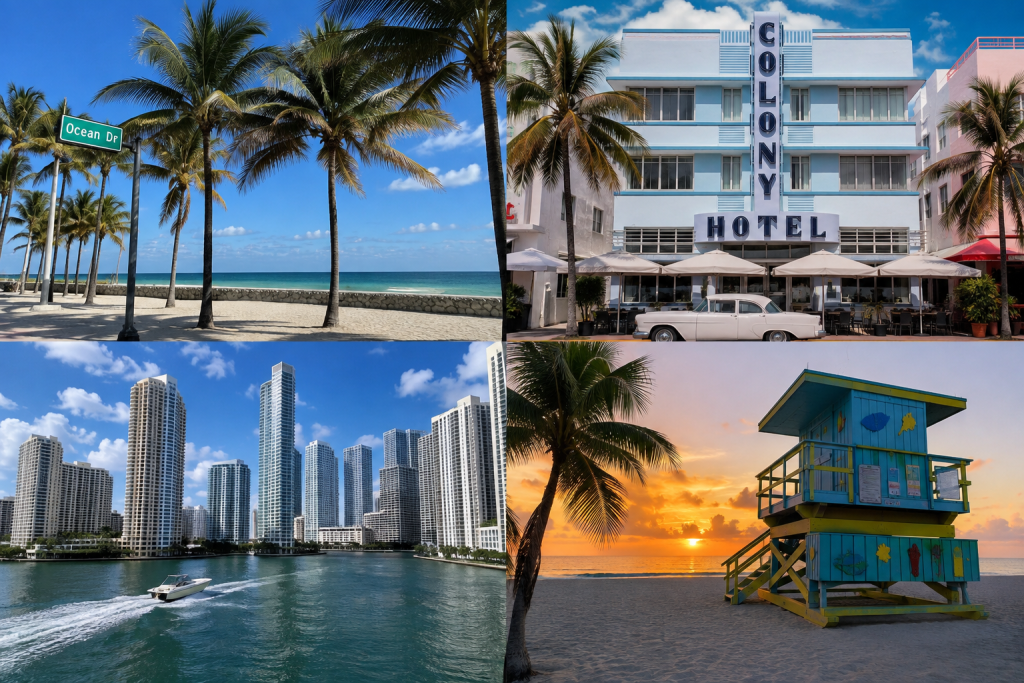
 Choose a well-placed Miami hotel, plan your standout meal each day, and leave enough open time for beach stops, cocktails, and unhurried evenings in Miami.
Miami can punish an overfilled itinerary. You arrive with twelve restaurant reservations, three neighborhoods marked for sightseeing, and a vague plan to spend “some time” near the water. By the second afternoon, traffic has swallowed an hour, lunch has drifted toward dinner, and the beach is still something you’ve seen through a car window.
A satisfying Miami escape needs fewer commitments and better placement. The city’s pleasures sit in distinct pockets. Each has its own pace, prices, and evening habits.
So, plan around those differences. Don’t treat Miami as one compact resort town. This way, you will eat better and linger longer. You’ll also enjoy the trip without checking the clock.
1. Pick a Base That Matches the Trip
What you do in Miami depends on where you will stay. For instance, a beachside address suits travelers who want –
- Morning swims
- Walkable dinners
- An easy return after cocktails.
Try to stay closer to the mainland if your list leans toward –
- Galleries
- Neighborhood restaurants
- Design districts
- Late nights away from the sand.
How to Compare Stays?
Before comparing rentals in miami draw a rough circle around the two or three places. These are the ones you care about most. Check actual driving times at the hours you expect to travel.
For instance, a six-mile journey on a map might still break your evening rhythm. Apart from the lodging budget, think about the following:
- Parking fees
- Valet waits
- Ride-share surcharges.
In fact, people ignore them while booking. So, they get irritated after they arrive.
You might also split the stay between the beach and the mainland. This is helpful on a six-night-or-more trip. But you might still lose time packing and checking in again. Usually, one well-placed base beats two attractive addresses. It helps a lot for a long weekend.
2. Build the Day Around One Good Meal
In most cases, restaurant planning becomes a collection exercise. People reserve every prominent dining room they can find. Then, they discover that three heavy dinners in a row get hectic. Miami rewards contrast.
So, choose one meal each day as the anchor. Everything else can remain loose.
If dinner is the event, don’t make breakfast another appointment. Just grab coffee, fruit, or a pastry. Then, leave room for the evening.
If your day is lunch-led, book somewhere you can sit for ninety minutes without wondering what comes next. That may be the right moment for –
- Seafood
- Stone crab (if available)
- Cuban cooking
- A leisurely spread of smaller plates.
What if you get only a 5:30 p.m. table? Take it. Early dinner frees the night for a walk or live music. You might even go to a carefully chosen bar. The fashionable 8:30 reservation isn’t automatically better. It strands you between daytime plans and dinner.
3. Drink With the Weather, Not Against It
What tastes appealing might change with heat and humidity. For instance, a generous red wine might be perfect on a menu. But it may feel too heavy after hours in the sun. Meanwhile, a chilled white, rosé, sparkling wine, or bitter aperitif might suit the moment better.
So, don’t choose the bottle outright. Ask how the dish is cooked. It is better to pair grilled fish with a mineral white wine. You can go for a richer preparation with spice or coconut. Then, you must go for something aromatic and slightly softer.
Moreover, fried food likes acidity and bubbles. If you have smoky meat, choose a red. Make sure it is served slightly cooler than room temperature. In fact, it works better than a dense bottle left warming on the table.
Use the same restraint technique with cocktails. One excellent pre-dinner drink is memorable. Four elaborate drinks in quick succession can erase an expensive meal and most of the following morning. Don’t treat water as an afterthought, especially if you’re moving between the beach, outdoor tables, and air-conditioned rooms.
4. Leave Useful Gaps in the Schedule
Unplanned time isn’t wasted time in Miami. It protects you from a late lunch, a sudden downpour, a traffic jam, or the discovery of a bar where you’d rather stay for another round.
A workable day might include:
- One timed reservation, preferably the meal that matters most
- A neighborhood block that can stretch or shrink
- Two hours with no assigned purpose
- A backup indoor stop for wet weather
- Enough return time to shower and change.
That looks modest on paper. In practice, it gives the city room to surprise you.
Keep neighboring activities together as well.
- Pair an art stop with lunch nearby.
- Follow a beach morning with dinner on the same side of the bay.
Most tourists cross the city repeatedly. This is because individual venues look appealing during research. Don’t make this planning mistake.
5. Spend Where the Memory Will Stick
You don’t have to spend the same amount of money on every part of the trip. Rather, pay more for a location if it saves two long journeys each day. Spend on the dinner where the cooking, cellar, or setting matters. Pull back elsewhere.
The trade-off is personal. A room with a dramatic view may justify its rate for someone who likes slow mornings. But it’s unused scenery for a traveler who leaves at eight and returns after midnight.
Likewise, don’t order a prestigious bottle if nobody at the table particularly wants it. Instead, ask for a less familiar region or producer. This way, even the price will be comfortable. Usually, specific guidance produces a better bottle than status does.
Let Miami Set the Pace
The best Miami escape rarely comes from covering the most ground. It comes from –
- Choosing a sensible base
- Protecting one fine meal each day
- Leaving enough slack to enjoy what you’ve booked.
Just leave the hour-by-hour campaign at home.
Miami is generous when you stop trying to conquer it. Swim before breakfast. You can have lunch later. Order the bottle that suits the food. Don’t try to plan occasions months ago.
A little discipline during planning creates something pleasantly undisciplined once you arrive. It is about sipping, savoring, and staying awhile.




Leave A Comment