Bordeaux has one of those names that seems familiar before you ever arrive. You see it on wine lists, cellar shelves and labels, so it’s easy to imagine the city mainly as a jumping-off point for vineyard visits.
That picture changes once you spend time on the ground. The Garonne curves past long rows of pale stone buildings, neighbourhood markets hum in the mornings, and old merchant streets still carry traces of the trade that made Bordeaux wealthy. Wine is everywhere, of course, but it’s only one part of the story.
Start Where Bordeaux’s Story Really Began: The Garonne
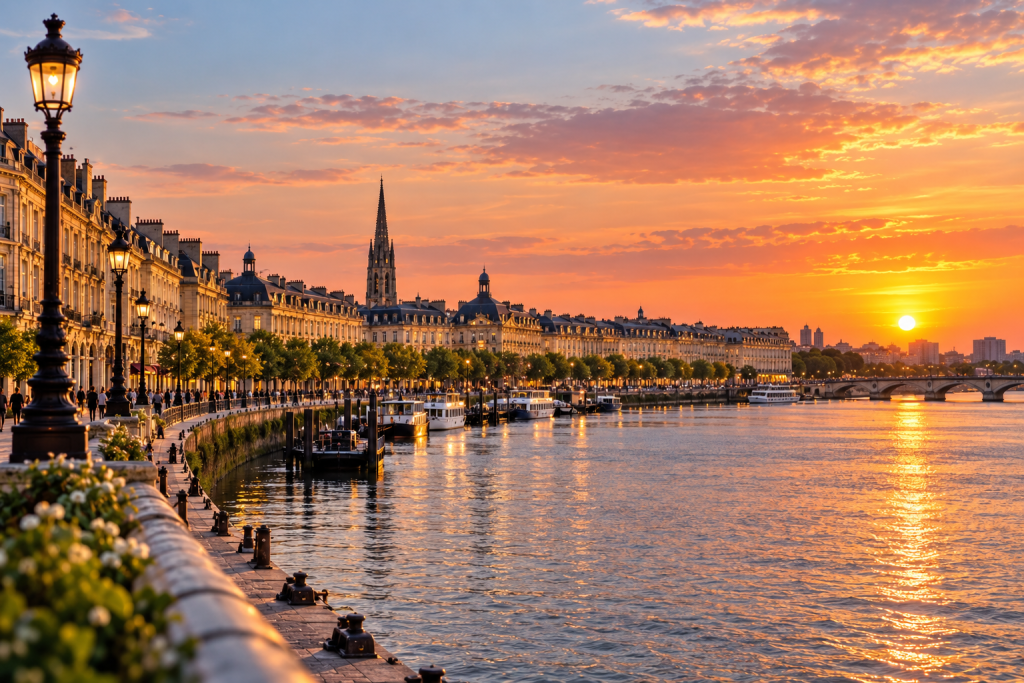
The river is a good place to begin because so much of Bordeaux grew around it. For centuries, the Garonne connected the city with ports farther afield, carrying barrels out and bringing money, goods and influence back in.
You can still read that history along the waterfront. The UNESCO-listed Port of the Moon follows the river’s broad curve, framed by the elegant façades that now define much of central Bordeaux. It’s an impressive sight, but the beauty of the quays makes more sense when you remember that this was once a working commercial artery.
Wine was central to that trade. The vineyards surrounding Bordeaux depended on merchants, shipping routes and access to international buyers, which meant the city and countryside developed together rather than separately.
Today, the waterfront feels much calmer. People cycle, walk, sit by the river and meet friends along the quays. The ships and warehouses no longer dominate the scene, yet the Garonne still explains a great deal about how Bordeaux became Bordeaux.
Wander Into the Streets the Wine Merchants Left Behind
Chartrons tells the story at a smaller scale.
This old wine merchants’ district once sat at the heart of Bordeaux’s commercial life. Townhouses, former warehouses and stone-fronted buildings still hint at the money that moved through the neighbourhood, even though antique shops, cafés and independent stores now give it a very different atmosphere.
The pleasure here comes from looking closely. Decorative stonework, old shutters, narrow side streets and quiet façades are easy to miss if you’re rushing between major landmarks.
That’s what makes Chartrons feel useful as well as attractive. The wine trade can sound abstract when reduced to dates and famous estates. Here, it becomes easier to picture the practical side of it all: offices, storage spaces, merchants making deals and workers moving goods through the district.
The history hasn’t disappeared. It has simply settled into the background of everyday life.
Let the Markets Explain Bordeaux Better Than a Museum Can
If the architecture shows Bordeaux’s past, the markets show how the city lives now.
There’s something immediately grounding about stalls filled with cheese, oysters, bread, charcuterie and seasonal produce. The food feels rooted in the region, especially when it’s served simply rather than dressed up for visitors.
That close connection between food and place is what makes culinary travel so satisfying in a city like Bordeaux. A glass of local wine tastes different when it arrives beside Atlantic oysters, regional cheeses or produce grown nearby. Suddenly, the wine belongs to a wider food culture instead of standing alone as the star attraction.
Markets also create a glimpse of the city at its most ordinary. Vendors greet people they know. Locals stop for regular purchases. Someone lingers over coffee longer than planned.
Those small moments give Bordeaux texture. They make the city feel lived in rather than staged for sightseeing.
Read Bordeaux’s History in Its Architecture
Bordeaux rewards people who look up.
Pale limestone, iron balconies and long symmetrical façades give the centre its polished appearance, but the details shift as you move through different streets. Older gates appear. Lanes tighten. Courtyards open unexpectedly behind heavy doors.
The grander parts of the city speak clearly of wealth. Much of that confidence came from periods when trade was booming and Bordeaux was expanding its influence. Yet the smaller, less perfect corners often feel more memorable.
A weathered wall or narrow passage can say as much about the city as a formal square.
That contrast keeps Bordeaux from feeling like a museum piece. The historic centre is beautiful, but it still feels used. People live above shops, scooters cut through old streets, and cafés occupy buildings that have seen several versions of the city come and go.
You don’t need an architectural background to appreciate any of it. Paying attention is enough.
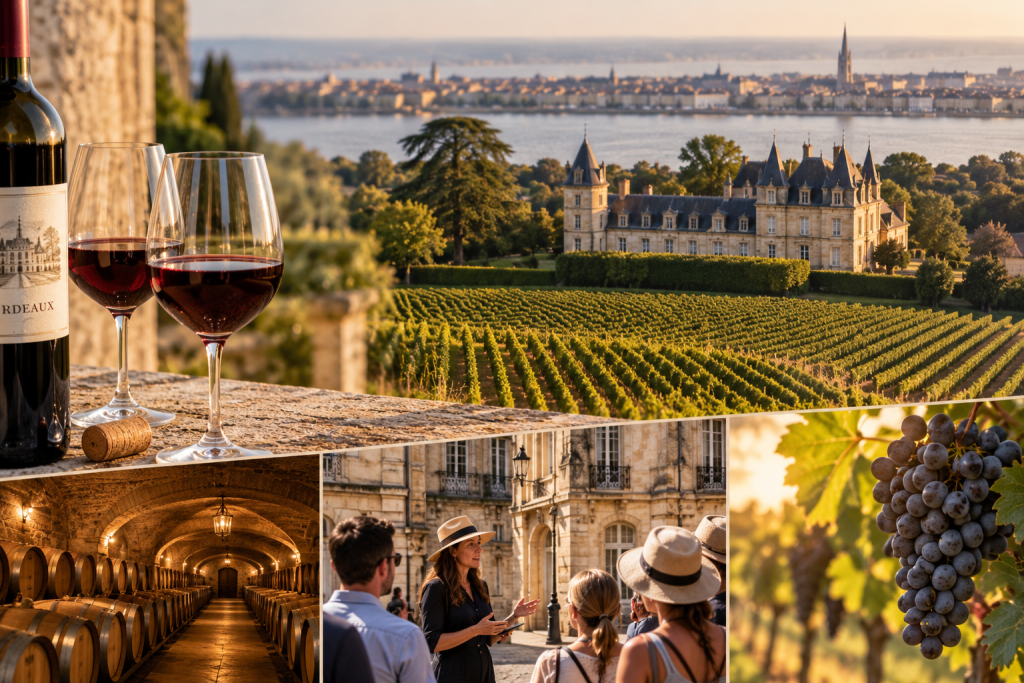
Photo made with AI
Follow the Story From the City Streets Into the Vineyards
Eventually, the story leads out of the centre.
The vineyards surrounding Bordeaux are famous in their own right, but they make more sense after you’ve seen the river, merchant districts and old trading streets in town. The countryside and city have always been connected by more than distance.
Wine had to be grown, stored, sold and transported. Estates relied on merchants. Merchants relied on routes to market. The Garonne helped tie those pieces together.
For travellers curious about those connections, Bordeaux wine and heritage tours can bring the vineyard landscapes into the same story as the architecture, commerce and local history found back in the city.
A château visit can feel very different once you start seeing it as one part of a much larger regional system rather than an isolated stop built around tasting.
Then there’s the landscape itself. Long rows of vines stretch toward villages and limestone buildings, and the pace slows almost immediately once you leave central Bordeaux behind.
The famous name on the bottle begins to feel more specific, tied to an actual landscape rather than an abstract reputation.
Step Back in Time in Saint-Émilion
Saint-Émilion makes that connection especially easy to see.
The village sits among vineyards, with steep medieval streets climbing between limestone buildings. You can move from a small square to a viewpoint over the vines in a matter of minutes, so the divide between heritage and wine country never feels very sharp.
That closeness gives the place much of its appeal.
You might spend part of the day wandering cobbled lanes, then find yourself looking across slopes that have shaped local livelihoods for generations. The wine feels tied to the land here in a way that’s hard to miss.
Saint-Émilion also changes the pace after Bordeaux city. Everything feels more compact, and the slower pace brings the surrounding landscape closer.
That contrast helps show why the region works so well as a whole. Bordeaux provides the commercial history and urban scale, while Saint-Émilion brings you closer to the landscape that sits behind the reputation.
Make Room for the Bordeaux That Isn’t on an Itinerary
Some of the best parts of Bordeaux are easy to overlook because they don’t sound impressive on a checklist.
A quiet café on a residential street. A bakery you didn’t plan to stop at. A walk that takes longer because you kept turning down streets that looked interesting.
Those moments matter.
They give you time to notice how quickly the city changes from one block to the next. A broad avenue can narrow into a much older-looking street. A formal square can give way to a corner where locals are chatting outside a small shop.
Bordeaux is good at rewarding detours.
There’s no need to fill every hour. Leave room for a long lunch or an aimless walk along the river. Sit somewhere simply because it feels pleasant.
The city has enough character in the spaces between its landmarks.
The Best Souvenir Is Understanding What’s in the Glass
By the end of a trip, Bordeaux tends to feel less like a wine name and more like a place.
The river explains how bottles reached the wider world. Chartrons gives the trade a human scale. Markets show how wine sits alongside local food, and the countryside connects everything back to the land.
That changes what you remember when you see Bordeaux on a label again.
Instead of thinking only about a grape, château or vintage, you may picture limestone streets, market stalls, vineyard roads or the Garonne bending through the city.
The wine may be what made Bordeaux famous, but the place around it is what gives the name its depth.



Leave A Comment