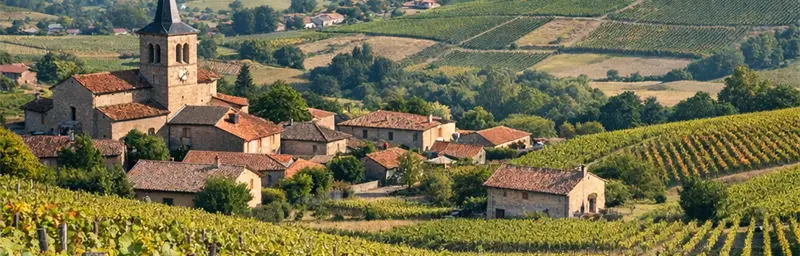
Photo Via Viniou
Some arrivals simply make the season feel complete. For me, one of those is Beaujolais Nouveau, especially when that bottle carries the unmistakable Georges Duboeuf label!
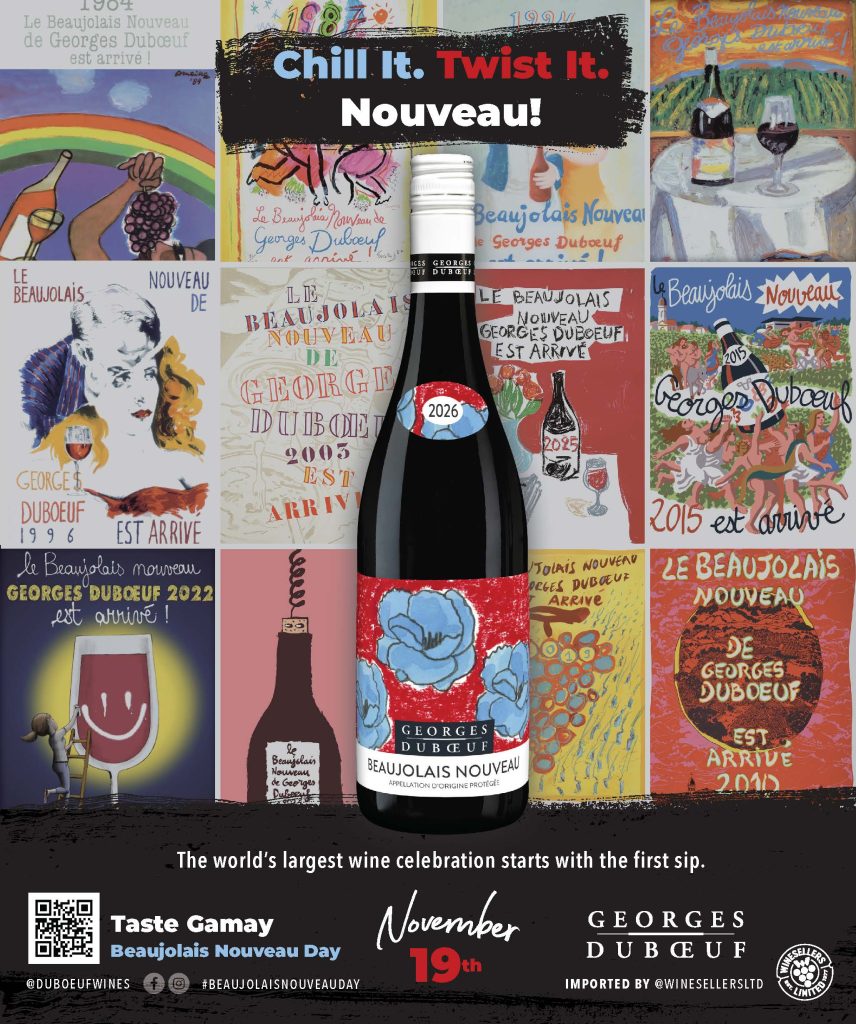
Chill It. Twist It. Nouveau!
This year’s Georges Duboeuf campaign, “Chill It. Twist It. Nouveau!”, captures exactly what makes this annual release so appealing: vibrant fruit, chillable versatility, and an easy invitation to celebrate.
Long before product drops and release-day countdowns became part of everyday culture, Beaujolais Nouveau had wine lovers circling a date on the calendar. Its arrival gives people around the world a shared occasion to discover the new harvest, and Georges Duboeuf helped turn that regional tradition into an international event.
As the campaign puts it, “The world’s largest wine celebration starts with the first sip.” With the November 19 release arriving just ahead of Thanksgiving, there are plenty of delicious reasons to join the celebration.
As a sommelier, I love when a wine offers both a story and a practical place at the table. Beaujolais Nouveau does exactly that. It celebrates the newest harvest, introduces people to the wonderful Gamay grape, and makes holiday wine pairing feel a little less complicated.
And when we talk about the producer who helped make this release an international occasion, we have to talk about Georges Duboeuf.
 Georges Duboeuf: The Name Behind the Celebration
Founded in 1964, Les Vins Georges Duboeuf became one of the great ambassadors of Beaujolais. Georges helped bring the region’s wines to an international audience, playing a major role in transforming Nouveau’s arrival into a celebration far beyond France. His promotion of the release, including events in the United States and Japan, helped make this annual tradition a fixture on wine lovers’ calendars.
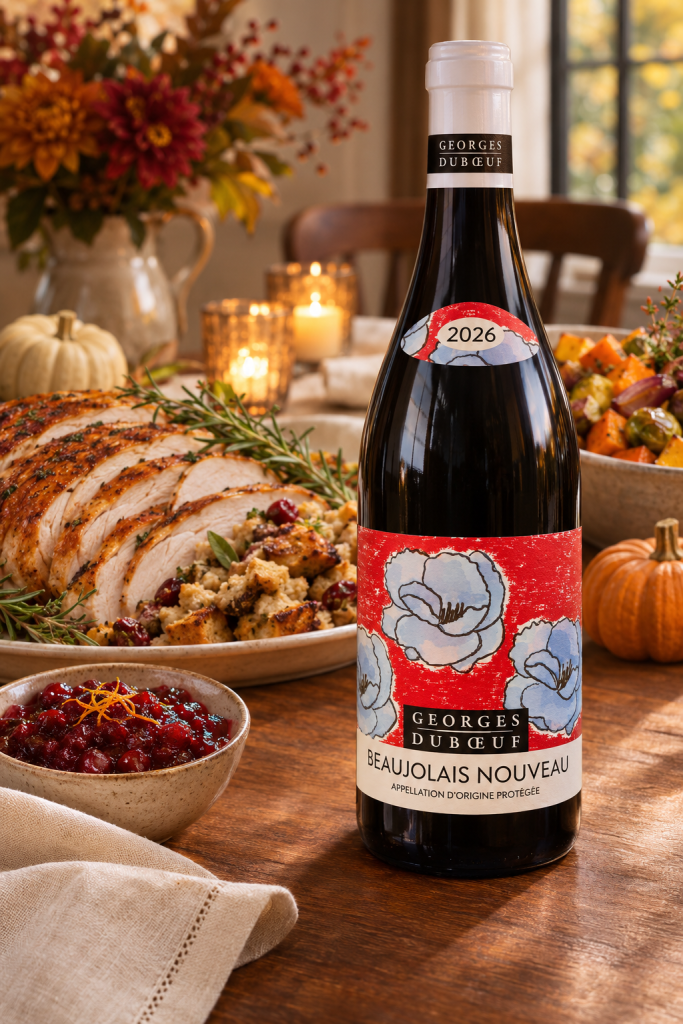
For me, Duboeuf is the name most immediately associated with Beaujolais Nouveau, and the artwork is part of that recognition. The colorful labels bring a sense of occasion to the bottle before it is even opened.
This year’s campaign also looks back at decades of Georges Duboeuf Nouveau artwork, celebrating the connection between wine, creativity, and tradition. The annual designs give each release a visual identity, making the bottles memorable markers of another harvest and another season of gathering.
The red, white, and pale blue floral design on my 2026 bottle feels especially festive for the holiday table. It is the kind of bottle that becomes part of the tablescape while giving guests a story to talk about.
What Exactly Is Beaujolais Nouveau?
Nouveau means “new,” and that is the essential idea: wine made from the current year’s harvest and released just weeks after the grapes are picked.
This is a vin primeur, intended to showcase youthful fruit and freshness rather than the character developed through years of maturation.
Its style is closely associated with carbonic and semi-carbonic maceration. These techniques involve intact grapes, with some fermentation beginning inside the berries in a carbon dioxide-rich environment. In traditional Beaujolais semi-carbonic winemaking, fermenting juice at the bottom of the vat produces the gas surrounding the grapes above.
For Nouveau, the maceration is short, commonly around four to six days. This helps create an expressive, approachable wine without extracting the same level of tannin found in more structured reds. Fermentation is then completed after pressing.
Think youthful energy, fresh fruit, and a wine made for enjoying soon after release.
Meet Gamay, the Grape Behind the Wine
The grape at the heart of red Beaujolais is Gamay, more fully known as Gamay Noir à Jus Blanc, a dark-skinned grape with pale juice.
Gamay is loved for its vibrant fruit, lively acidity, and often supple tannins. Depending on where it grows and how it is made, it can offer everything from juicy, immediately approachable wines to more structured expressions with real depth.
That range is part of what makes it so interesting. A youthful Nouveau introduces Gamay’s playful side, while other Beaujolais wines reveal how beautifully the grape can communicate place.
Fresh red berries, cherry, and floral notes are useful reference points when exploring the grape, although each wine and vintage has its own personality. These are style expectations, rather than my personal tasting notes for this early-arriving 2026 bottle.
Why the Beaujolais Region Matters
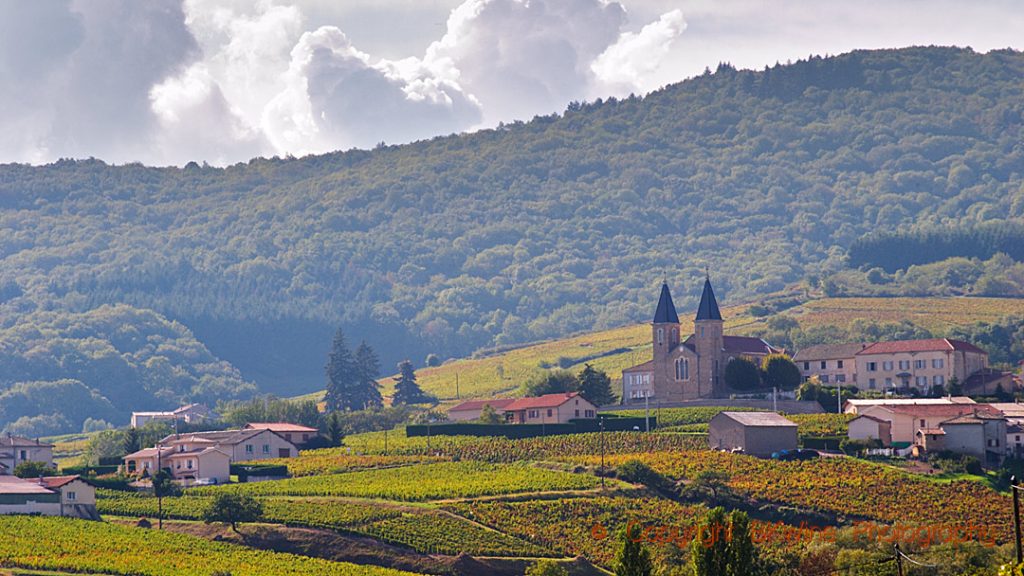
Photo Via BK Wine Magazine
Located in eastern France between the Mâconnais to the north and Lyon to the south, Beaujolais deserves attention well beyond its famous November release.
The region has 12 appellations: Beaujolais, Beaujolais-Villages, and the ten individual crus. Nouveau is a young-wine style within Beaujolais and Beaujolais-Villages, rather than a separate rung above or below those appellations.
That distinction matters. Seeing “Beaujolais” on a label does not automatically mean the wine is Nouveau, and the region’s identity extends from harvest celebrations to bottles worth following over time.
Here is a helpful way to read the labels:
| Label | What it tells you |
|---|---|
| Beaujolais Nouveau | A newly made wine from the current harvest, released in November for early enjoyment. |
| Beaujolais-Villages Nouveau | The same young-wine concept, sourced within the more geographically specific Beaujolais-Villages appellation. |
| Beaujolais or Beaujolais-Villages without “Nouveau” | Wines outside the immediate Nouveau release, with styles ranging from fresh and easygoing to more substantial. |
| A cru name, such as Morgon or Fleurie | Wine from one of ten individually recognized appellations, each with its own identity. |
The ten crus are Brouilly, Côte de Brouilly, Régnié, Morgon, Chiroubles, Fleurie, Moulin-à-Vent, Chénas, Juliénas, and Saint-Amour. These northern appellations show another dimension of Gamay, often with greater structure and potential for development. “Cru” here identifies a named appellation, rather than one individual vineyard.
Three Reasons Beaujolais Nouveau Is Perfect for Thanksgiving
1. Its freshness balances a rich meal
Thanksgiving brings butter, gravy, creamy potatoes, and plenty of savory richness. The lively acidity associated with Gamay offers a refreshing counterpoint between bites. That is one of the qualities I look for when choosing a wine for a meal with so many dishes.
My pairing suggestion: roast turkey with gravy, buttery mashed potatoes, and herb-filled stuffing.
2. Its gentle tannins suit the turkey
Turkey has a relatively delicate flavor, particularly the breast meat. Nouveau’s typically supple, low-tannin style gives it an easy place alongside poultry without demanding that the food match a powerful, heavily structured red.
I would especially enjoy this pairing with turkey, roasted mushrooms, and savory pan juices.
3. Its fruit connects the different flavors on the plate
Thanksgiving rarely offers one tidy pairing. There may be turkey beside sausage stuffing, cranberry sauce, roasted squash, and vegetables, all in the same bite!
To my sommelier palate, a youthful, fruit-driven red makes sense here. Its berry character can echo the cranberry element while providing a lovely contrast to earthy mushrooms and savory sausage. With very sweet sides, I would keep the sweetest bites separate, since sweetness in food can make a dry wine seem sharper.
My pairing pick? Sourdough sausage stuffing with fennel, onion, and fresh cranberries. That combination practically asks for a festive bottle of Gamay.
 Why Is Nouveau Usually Less Expensive?
Beaujolais Nouveau often costs less than many cru Beaujolais wines, although prices overlap and vary by producer and market.
The key is the production model. Nouveau moves from harvest to sale quickly, with short maceration and no prolonged maturation before release. Compared with a wine held for months or years, that generally means less time tied up in cellar space, inventory, and financing. That is an economic explanation for its often accessible pricing, rather than a claim about Duboeuf’s individual production costs.
A cru wine’s price may also reflect its specific vineyard source, farming choices, yields, and maturation. Age alone does not determine price, and an affordable Nouveau still requires thoughtful grape growing and careful winemaking.
I appreciate it for what it offers: a joyful, seasonal introduction to Beaujolais that makes opening a bottle for a gathering feel easy.
Enjoy It Beyond Thanksgiving
November 19 is the beginning of the celebration, and Thanksgiving is only one occasion for it.
My fall and winter pairing suggestions include roast chicken, a holiday cheeseboard, mushroom flatbread, turkey sandwiches, or a simple sausage-and-potato supper. It is also a lovely theme for a casual gathering: a few cheeses, something warm from the oven, and a conversation about the newest harvest.
I recommend serving it lightly chilled, around 55°F, to emphasize its freshness. Plan to enjoy it through the fall and winter following release, while its youthful character is the attraction, rather than setting it aside for long-term cellaring.
A New Harvest, a Reason to Gather
What I love about Georges Duboeuf Beaujolais Nouveau is how it brings wine back to something wonderfully approachable: a harvest, a meal, and people coming together.
As a sommelier, I appreciate the opportunity to introduce readers to Gamay and the broader Beaujolais region. As someone who loves entertaining, I appreciate a festive, versatile bottle that fits everything from Thanksgiving dinner to a casual evening of cheese, charcuterie, and catching up.
Receiving this year’s bottle early made me even more excited to share the story behind this iconic fall tradition. Mark your calendar for November 19, 2026, give your bottle a light chill, and make room for a little harvest celebration at your table.
Chill It. Twist It. Nouveau!

Leave A Comment