
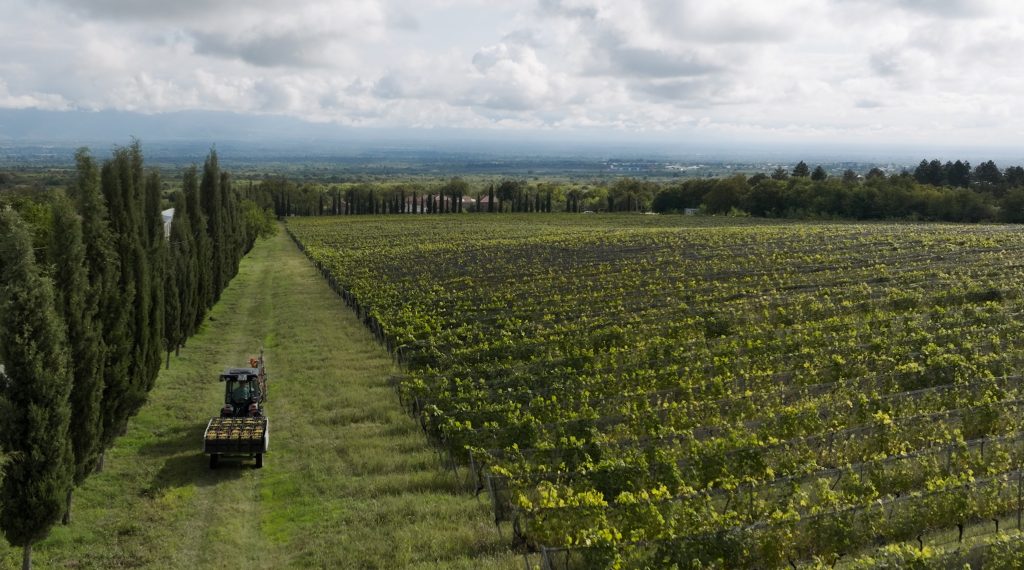
Photo Via Vazisubani Estate
Georgia is one of the oldest wine-producing countries in the world, yet for many American wine drinkers, its indigenous grapes and traditional winemaking techniques still offer an entirely new world to explore. That is part of what makes Georgian wine so exciting right now.
At the heart of Georgia’s Kakheti wine region is Vazisubani Estate, a historic property where more than a century of winemaking tradition meets a modern approach to hospitality and fine wine.
Founded in 1891 by Georgian nobleman Sulkhan Chavchavadze, Vazisubani Estate was once a gathering place for writers, artists, and some of Georgia’s leading cultural figures. Today, the restored estate encompasses 35 hectares of vineyards, a historic marani, or wine cellar, a 19-room boutique hotel, and a dendrological garden.
The estate has also earned a One MICHELIN Key distinction, making it as much a destination for wine and food lovers as it is a working winery.
But what fascinates me most is what’s happening inside the cellar.
Understanding Qvevri Wine
You really cannot discuss Georgian wine without talking about qvevri. Qvevri are large clay vessels traditionally buried underground and used for fermentation and aging. This ancient Georgian method can create wines with remarkable texture, structure, aromatics, and aging potential. With white grapes, extended contact with the skins can produce the beautiful amber color that has made Georgian amber wines increasingly recognizable among adventurous wine drinkers.
Vazisubani Estate works with indigenous Georgian varieties including Saperavi, Rkatsiteli, Kisi, Khikhvi, and Kakhuri Mtsvane, producing both traditional qvevri wines and wines made using contemporary European techniques. I recently explored two of the estate’s qvevri wines, and both are especially fun bottles to bring to the table as we move into fall.
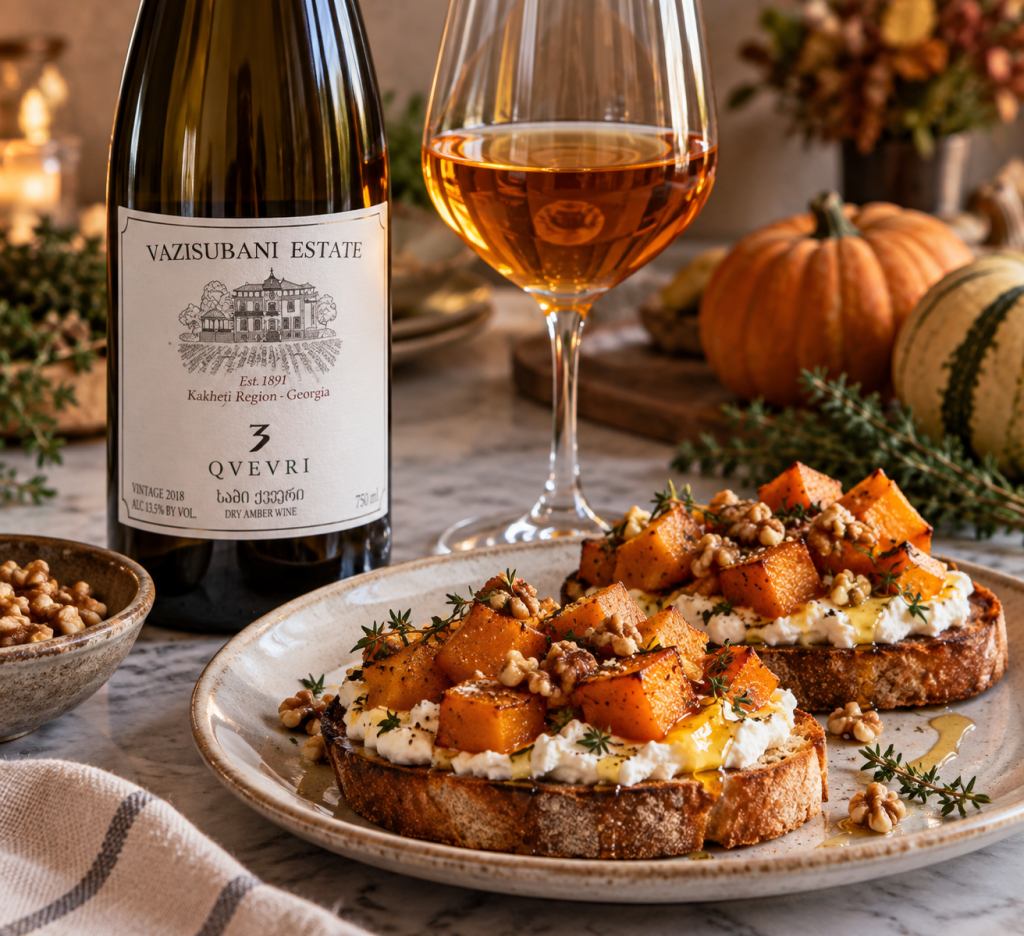
Photo edited with AI
Vazisubani Estate 3 Qvevri Amber
If you’ve been curious about amber wine but haven’t known where to begin, this is a fascinating introduction. I especially enjoy amber wines during the fall season,
The Vazisubani Estate 3 Qvevri Amber combines three indigenous Georgian white grapes: Rkatsiteli, Mtsvane, and Kisi. The three varieties bring different elements to the blend, with citrus, tropical fruit, and apricot developing into a more complex profile of dried fruit, honey, and tea-like notes. There is also a noticeable tannic structure, which is one of the reasons amber wines can be so much fun at the dinner table.
Unlike a conventional white wine, this is a bottle I wouldn’t limit to seafood or lighter dishes. The texture and tannin give you room to play with roasted vegetables, squash, herbs, earthy spices, and richer fall flavors.
Fall Pairing: Roasted Butternut Squash & Whipped Feta Toast
This may be one of my favorite fall combinations for the 3 Qvevri Amber.
Roast butternut squash with extra virgin olive oil, sea salt, black pepper, and a little thyme until caramelized. Spread whipped feta over grilled sourdough, add the roasted squash, and finish with toasted walnuts and a small drizzle of honey.
The apricot and dried-fruit character of the wine complements the sweetness of the squash, while its tannic structure works beautifully against the creamy feta. The honey ties into the wine’s richer aromatics without turning the pairing into something overly sweet.
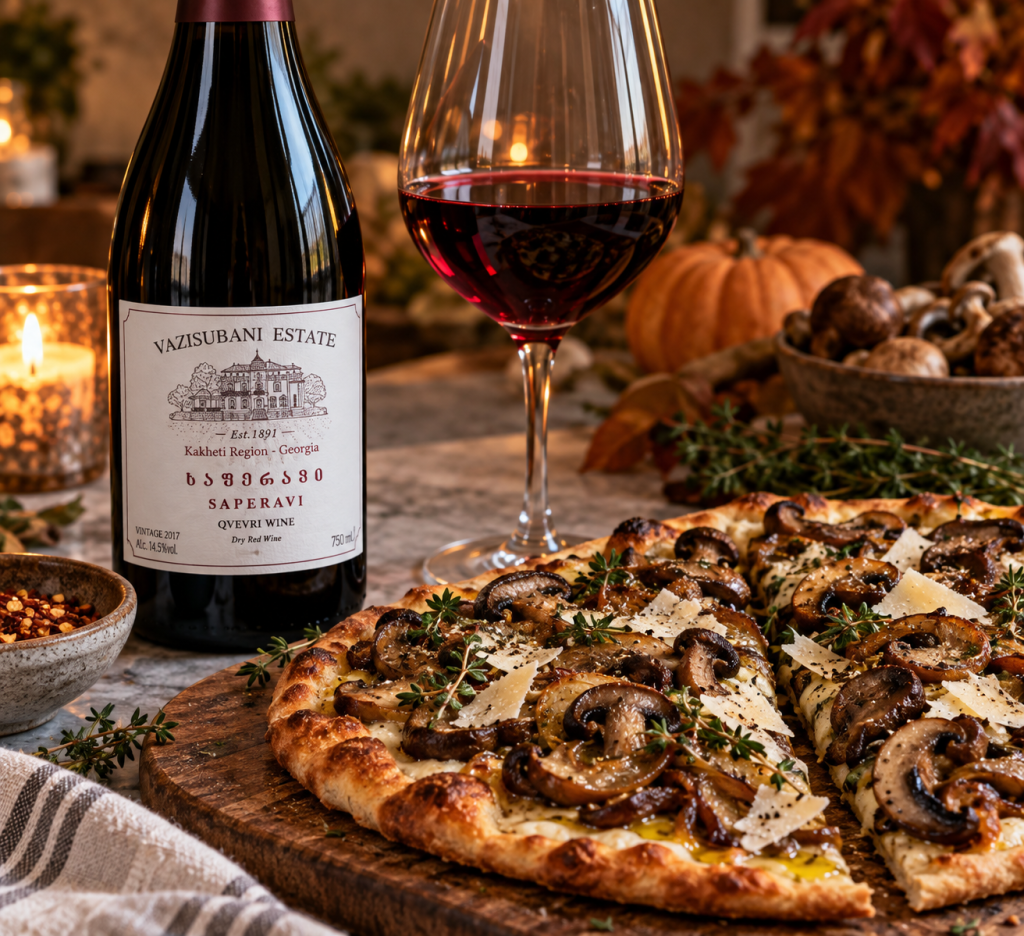
Photo edited with AI
Vazisubani Estate Saperavi Qvevri
Then we move to Saperavi, one of Georgia’s most important indigenous red grapes. The Vazisubani Estate Saperavi Qvevri is deep, structured, and intensely colored, showing dark fruit notes including cherry, mulberry, and blackberry, backed by substantial but balanced tannins and a long finish.
This is exactly the type of wine I start craving once cooler evenings arrive. Saperavi has enough structure for richer proteins, but its dark fruit character also makes it particularly interesting with earthy vegetables, mushrooms, warming spices, and slow-cooked dishes.
Fall Pairing: Mushroom & Caramelized Onion Flatbread
For something meatless, pair the Saperavi with a crispy flatbread topped with caramelized onions, roasted mushrooms, herbs, and a creamy cheese such as mozzarella or fontina.
Mushrooms bring out the savory, earthy side of the wine, while caramelized onions soften the tannins and echo some of the darker fruit character. Finish the flatbread with good extra virgin olive oil and fresh thyme just before serving.
It’s simple enough for a fall weeknight but absolutely worthy of opening a bottle of wine. Another pairing however… since we’re in that season, would be: Herb-Roasted Lamb with Pomegranate
For a heartier pairing, Saperavi and lamb are a natural match. Season lamb with garlic, rosemary, thyme, black pepper, and extra virgin olive oil, then serve it alongside roasted potatoes or root vegetables. Finish the plate with fresh pomegranate seeds or a restrained pomegranate reduction.
The richness of the lamb stands up to Saperavi’s tannic structure, while pomegranate connects beautifully with the wine’s cherry, blackberry, and darker fruit characteristics.
This would also be a gorgeous pairing for a fall dinner party.
Same Estate, Two Very Different Fall Wines
What I love about tasting these wines together is how clearly they demonstrate the range of Georgian wine.
One is an amber wine made from three indigenous white varieties, showing dried fruit, honey, tea, and texture. The other is a deeply colored Saperavi with dark berries, structure, and serious presence.
Yet both are connected by the qvevri tradition that has helped define Georgian winemaking for centuries.
And if you’ve spent most of your wine-drinking life exploring France, Italy, Spain, or California, Georgia offers something genuinely different. The grapes may be unfamiliar, but that’s exactly what makes opening one of these bottles so much fun.
Fall is also an ideal time to experiment. Amber wines pair beautifully with the roasted, earthy, savory flavors that begin appearing on our tables this time of year, while a structured red like Saperavi practically begs for mushrooms, lamb, herbs, and slow-cooked dishes.
You don’t necessarily need to know how to pronounce every Georgian grape before you begin. Pick a bottle, cook something delicious, and start exploring.
Both wines are available in the United States through select retailers, including Total Wine & More. Availability and pricing vary by market.


Leave A Comment