There are olive oils you taste, and then there are olive oils where you want to know the entire story behind what is in the bottle.
Recently, I had the opportunity to sit down over Zoom with the brother-and-sister team behind Olio Piro, Romain Piro and Marie-Charlotte Piro, and I walked away from our conversation even more fascinated by the thought, agriculture and precision that go into producing exceptional extra virgin olive oil.
As an Olive Oil Sommelier, I am always looking beyond whether an oil simply tastes good. I want to know about the olives, the trees, the harvest, the mill, the land and, most importantly, the people making it.
With Piro, all of those pieces come together.
A Tuscan Olive Oil With a Family Behind It
Olio Piro was launched in the United States in 2020 by Marie-Charlotte and Romain, but Romain’s experience producing olive oil goes back much further. He has been producing olive oil in the Seggiano and Monte Amiata area of southern Tuscany since 2007.
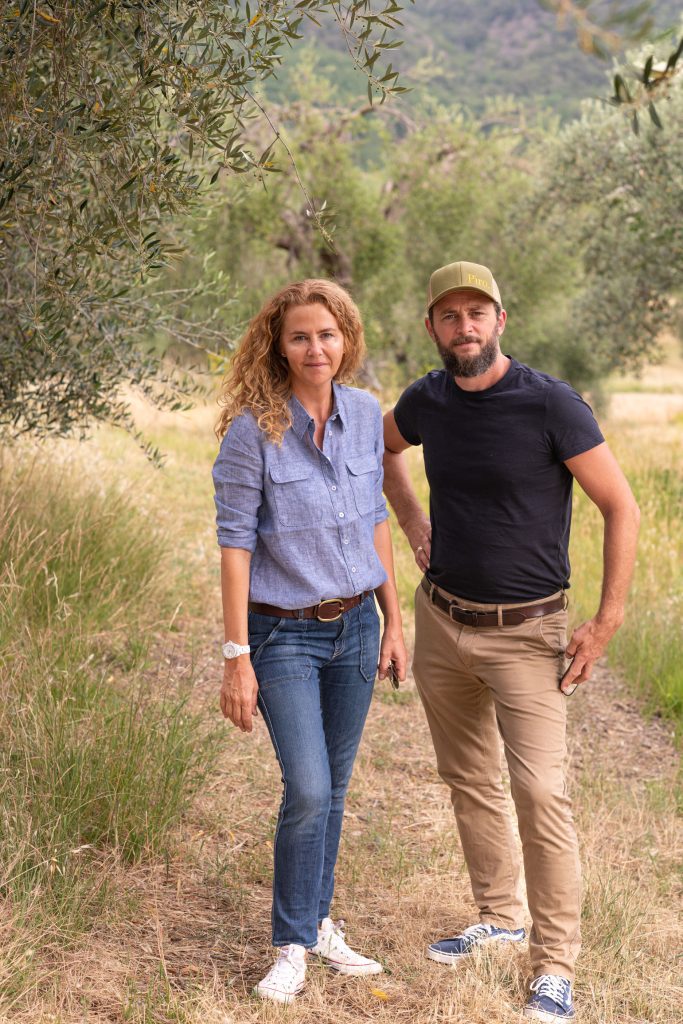
Photo from Olio-Piro.com/Press Kit
The family’s groves sit on the slopes of Monte Amiata in Tuscany’s Maremma region, where volcanic soil plays an important role in the growing environment. Some of the olive trees are approximately 300 years old, and Piro works with cultivars including Leccino, Moraiolo, Frantoio and the much rarer Olivastra Seggianese.
One thing Romain said during our conversation stuck with me: quantity versus quality.
When you’re making premium EVOO, those two things don’t always coexist.
Early harvesting means accepting a smaller yield in exchange for the characteristics you’re looking for in the finished oil. Piro hand-harvests its olives early and takes considerable care to prevent bruising before they reach the mill.
And you can taste that decision.
The Art of Knowing When to Harvest
This was one of my favorite parts of our conversation because determining harvest isn’t simply about looking at a calendar.
Romain explained that he checks the olives continually as harvest approaches, looking at the fruit, examining the skin and flesh, and, of course, tasting.
There is experience involved that can’t necessarily be reduced to a formula.
The growing environment matters too. Tuscany experienced a particularly challenging harvest year, with heat affecting the region, requiring Piro to source some fruit from areas including Umbria, Lazio and Puglia and to harvest earlier because of the conditions.
Agriculture demands adaptability. You can have standards, systems and decades of experience, but ultimately, nature gets a vote.
That’s one of the things consumers sometimes forget when purchasing olive oil. EVOO is an agricultural product. Vintage variation exists, just as it does with wine.
An Ancient Olive Variety Worth Knowing
One of the most fascinating components of Piro is the Olivastra Seggianese.
These trees were on the property before the Piro family arrived, and this ancient Tuscan variety requires considerable work. The trees need extensive pruning, and the olives themselves can be difficult to harvest.
But there is a reason to preserve them.
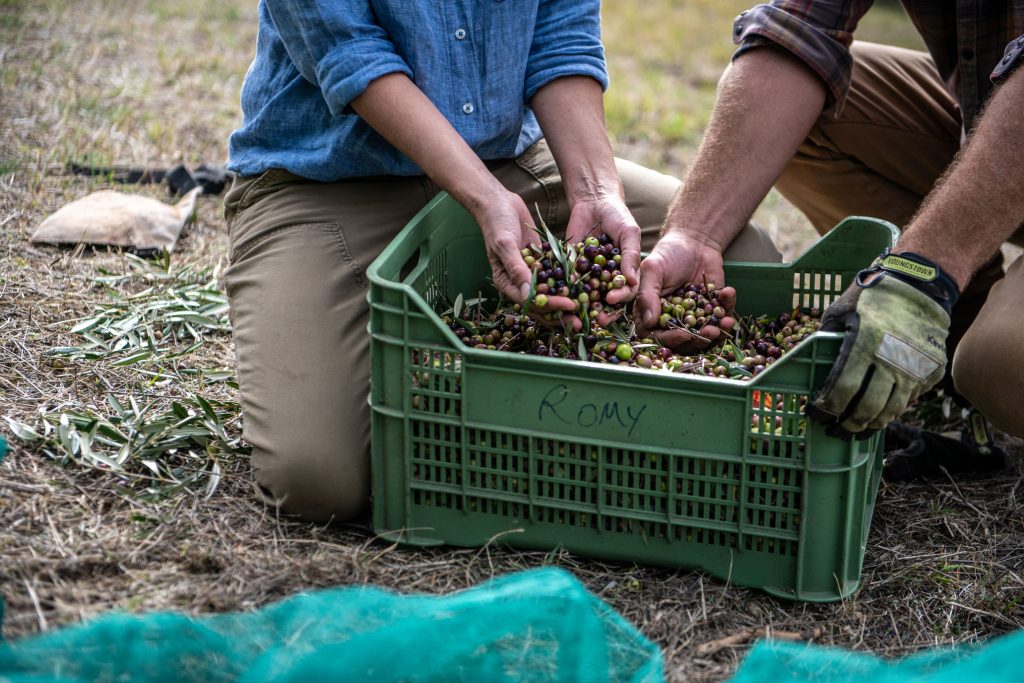
Photo Via Olio Piro press kit
Olivastra Seggianese produces an oil with an elegant, delicate character, and Romain described notes of pear and soft fruit, something quite distinctive compared with more aggressively bitter or pungent Tuscan cultivars.
Piro combines that delicacy with other varieties to build balance and structure rather than simply intensity.
That’s an important distinction. The strongest olive oil isn’t automatically the best olive oil. Balance matters.
So, What Does Olio Piro Taste Like?
Olio Piro Extra Virgin Olive Oil is aromatic, green and beautifully structured.
Expect aromas and flavors of green almond, fresh herbs, green banana and artichoke, followed by nuttier notes and a lingering black-pepper finish. That bitterness and pepperiness are features I want consumers to become more comfortable with.
When you taste a high-quality EVOO and experience bitterness on your tongue or that peppery sensation at the back of your throat, don’t immediately think something is wrong. Those sensations can be associated with the phenolic compounds naturally present in fresh olive oil. Piro is an early-harvest, single-origin, high-polyphenol EVOO, so this is an oil I would absolutely showcase rather than hide.
Drizzle it over grilled meats, roasted vegetables, beans, soups, burrata, tomatoes or simply good bread. This is the bottle you reach for when you want the olive oil to actually be part of the flavor of the dish.
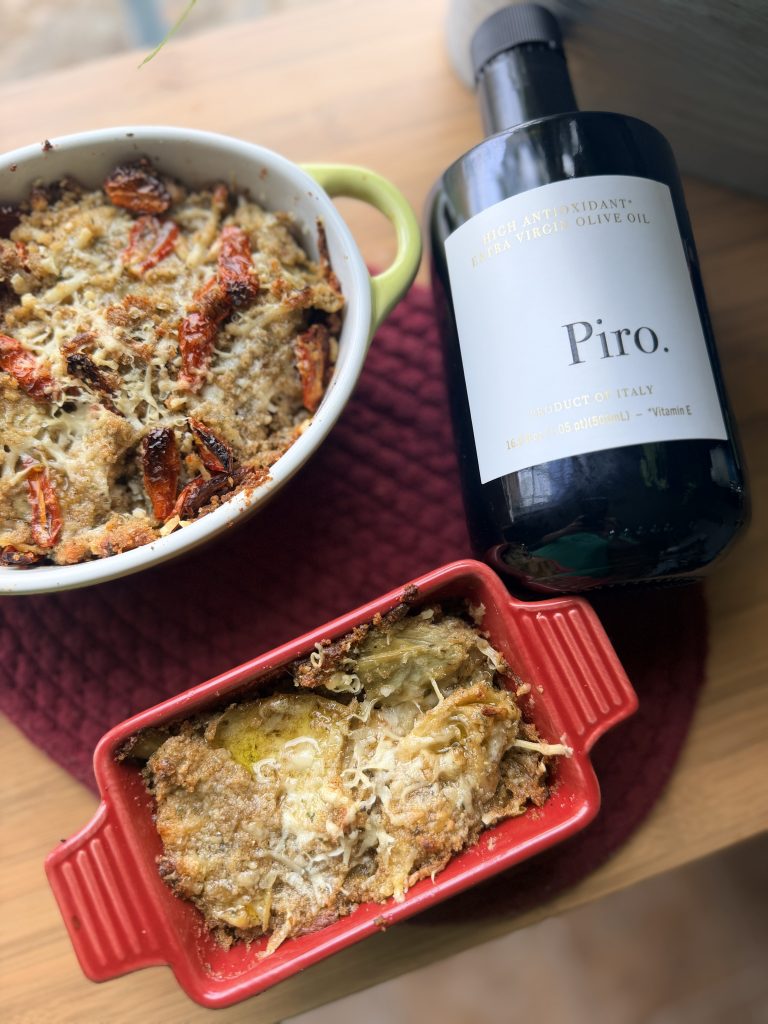
Breadcrumbs blended with Cucino, dish topped with Piro.
Cucino: Yes, You Can Cook With Good Olive Oil
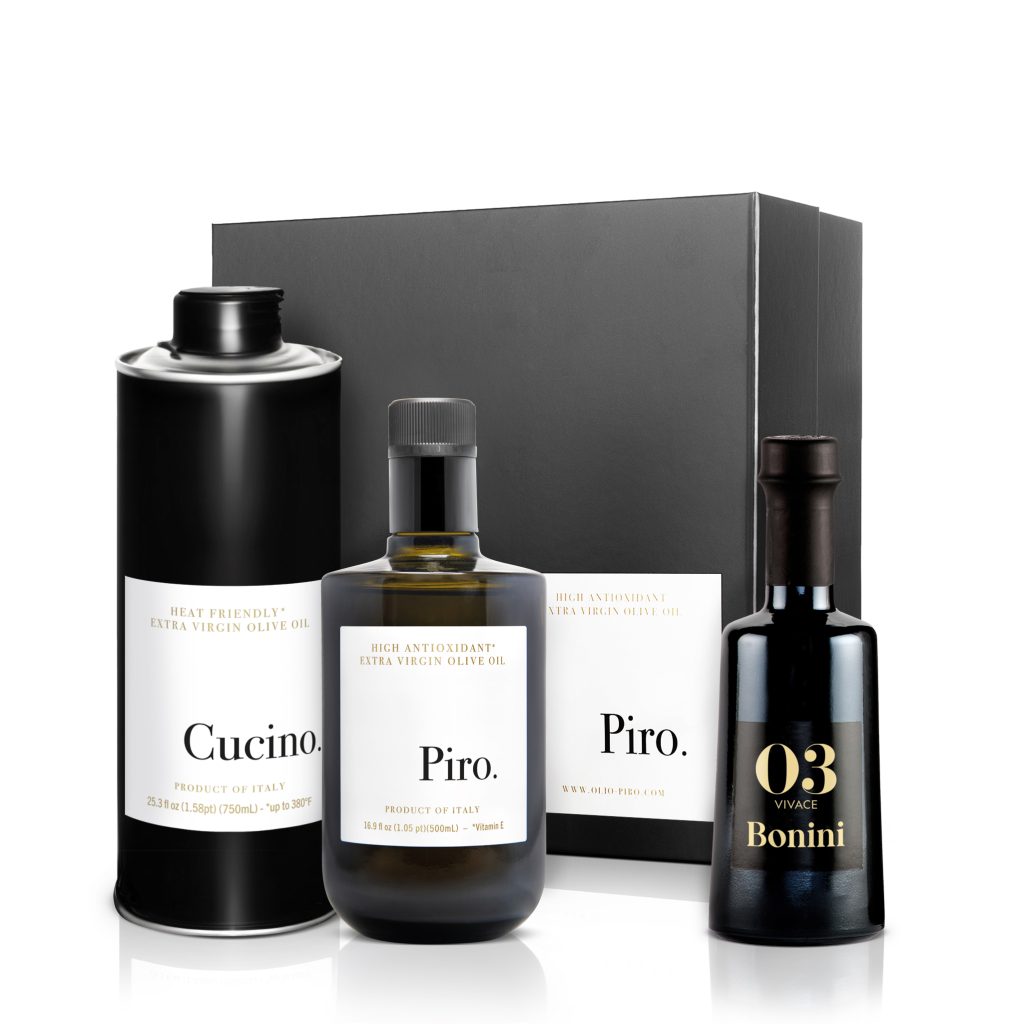
We also discussed Piro Cucino, Piro’s EVOO created specifically with everyday cooking in mind.
And I love this because we still have to dismantle the idea that you shouldn’t cook with extra virgin olive oil. Cucino is made using Leccino, Moraiolo, Frantoiano and Coratina and is formulated as a balanced, heat-friendly EVOO. Piro mills the varieties separately and then blends them to achieve the desired finished profile. The flavor is intentionally versatile, with nutty notes alongside almond, artichoke, cinnamon and green banana. It’s designed for sautéing, roasting, marinades and sauces without overwhelming the other ingredients in your dish.
It’s also packaged in a recyclable 750ml aluminum bottle, which makes a lot of sense for a product intended to live beside your stove and be used frequently. My simple way to think about the two? Cook with Cucino. Finish with Piro.
You certainly can cook with Piro, but Cucino gives you a beautiful everyday EVOO specifically designed for that role, while allowing the more complex character of Piro to shine as a finishing oil.
Sustainability From Grove to Bottle
Another aspect I appreciated was hearing how intentionally Piro approaches waste.
The olive byproducts from production aren’t simply viewed as garbage. Material from the milling process can be repurposed and recycled, while the approach in the groves is centered around maintaining a productive agricultural ecosystem. That philosophy extends to Cucino’s recyclable aluminum packaging.
For me, sustainability means much more when it is integrated into the production process instead of added to a marketing campaign afterward.
And Then There’s Balsamic…
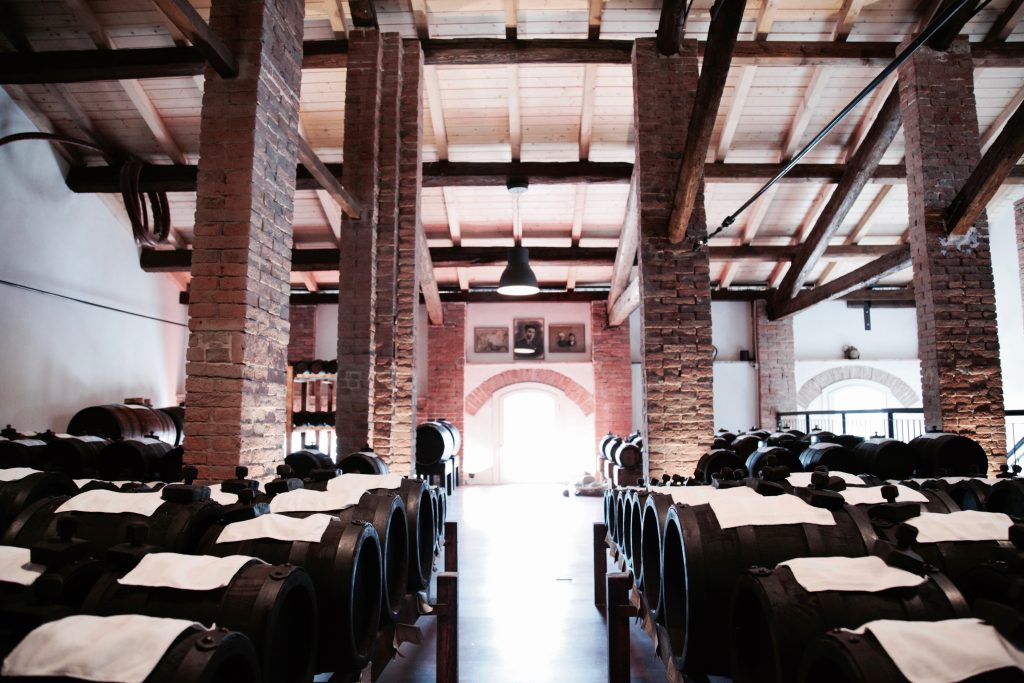
Photo via Olio Prio Press Kit
Just when I thought our conversation couldn’t become more delicious, we moved from Tuscany to Modena. Marie-Charlotte led Piro’s acquisition of Acetaia Bonini in 2025, bringing another extraordinary Italian product into the Piro portfolio.
And this is where we need to talk about what traditional balsamic really is. We’re not talking about the inexpensive, thin, aggressively acidic product many Americans associate with balsamic vinegar. Traditional balsamic begins with grape must, essentially freshly crushed grape juice that includes the natural components of the fruit. The must is cooked and then undergoes a long aging process that creates concentration, complexity, sweetness and acidity.
What you eventually taste is something entirely different from everyday supermarket balsamic. Piro’s Bonini collection includes aged balsamics from Modena, with the company’s Cellar Collection showcasing the craftsmanship behind these products.
Why EVOO + Balsamic Works So Well
Of course, I had to taste the balsamic alongside the olive oil. This is where pairing becomes interesting. Piro EVOO brings bitterness, pungency, green fruit and savory complexity. A beautifully aged balsamic brings concentrated fruit, sweetness and acidity.
Put the two together and you create balance. The balsamic doesn’t need to cover the olive oil, and the olive oil shouldn’t disappear beneath something syrupy and sweet. When both products are exceptional, each should remain identifiable. Try them together over Parmigiano Reggiano, strawberries, roasted vegetables, grilled steak, tomatoes, beans or even vanilla gelato.
Sometimes the simplest combinations are where exceptional ingredients make the strongest statement.
It’s easy to notice Piro because the packaging is beautiful. But after speaking with Romain and Marie-Charlotte, what impressed me more was everything happening before the oil ever reaches that bottle. The volcanic Tuscan soil. Ancient olive trees. Harvest decisions made by tasting fruit in the grove. Lower yields accepted in pursuit of quality. Individual cultivars milled with intention. Sustainability throughout production. And two siblings bringing very different strengths to the same mission.
Romain is deeply connected to production and quality in Tuscany. Marie-Charlotte has helped take that work and build Piro into an international brand, developing partnerships and introducing consumers to what genuinely fresh, premium EVOO can taste like.
That’s a pretty powerful brother-and-sister combination. And for me, that’s what makes tasting olive oil exciting. You’re never tasting just olive oil. You’re tasting the cultivar, harvest, soil, weather, milling decisions, traditions and people behind it. And Piro has quite a story to tell.
Learn more and explore Olio Piro, Cucino and the Bonini collection:
Explore Olio Piro
This article reflects my conversation with the Piro team as well as my experience and perspective as a certified Olive Oil Sommelier.



Leave A Comment