There is something I love about a holiday where the food on the table carries meaning, and Rosh Hashanah is filled with ingredients and dishes that do exactly that. Rosh Hashanah marks the Jewish New Year, and while traditions vary among families and communities, sweetness plays an especially important role at the holiday table. Foods such as apples, honey, sweet carrots and honey cake symbolize the hope for a good and sweet year ahead. Honey in particular has become one of the holiday’s most recognizable ingredients, whether drizzled over apples, incorporated into a dish or served alongside challah.
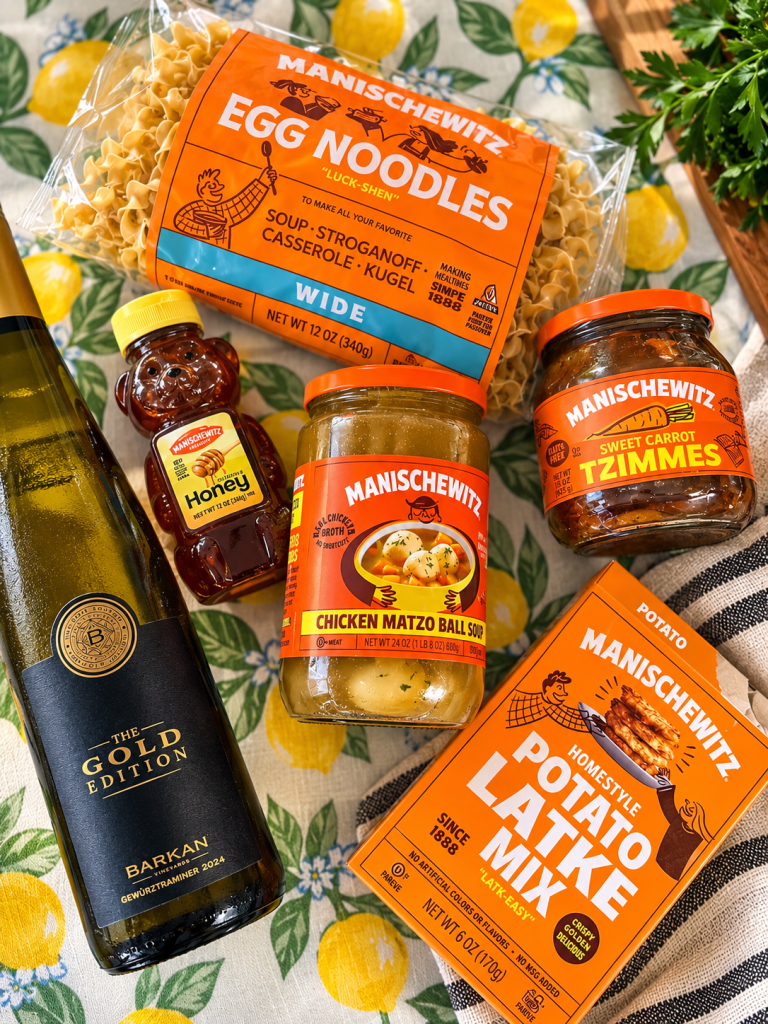
This year, Manischewitz sent me a wonderful Rosh Hashanah box filled with foods that made it incredibly easy to explore some of these traditions in my own kitchen. Inside were egg noodles, matzo ball soup, Tzimi’s sweet spiced carrots and honey, essentially giving me the building blocks for a cozy holiday meal with plenty of room to add my own touches. I also still had a box of their Latkes, because I buy those at the grocery store a lot.. they’re my favorite side, and included these. Although not usually eaten during the holiday, if you’re more of a potato person these rock… and you can drizzle them with honey!!
One thing I particularly appreciate about Manischewitz is that these are approachable products. You can enjoy them exactly as they come, or use them as a starting point and add a few ingredients of your own. I also love this article from Kosher.com by Rachel Kor, to cook for the entire holiday including a menu and recipes!
Why So Many Sweet Foods for Rosh Hashanah?
The sweetness is intentional. One of the best-known Rosh Hashanah customs is dipping apples into honey while expressing the hope for a good and sweet new year. Sweet foods have become an important part of holiday meals, with dishes like tzimmes, honey cake and sweetened challah carrying that symbolism throughout the table.
Carrots have their own significance as well. In Ashkenazi tradition, carrots can represent hopes for abundance and increase in the coming year. Tzimmes, traditionally a sweet dish often made with carrots and sometimes dried fruit, fits beautifully into a Rosh Hashanah meal.
So when you see honey, sweet carrots and other sweet dishes covering a Rosh Hashanah table, they aren’t simply there because they taste good. They’re part of starting the year with intention, abundance and a little extra sweetness. And honestly, I love that.
Manischewitz Matzo Ball Soup: Make It Your Own
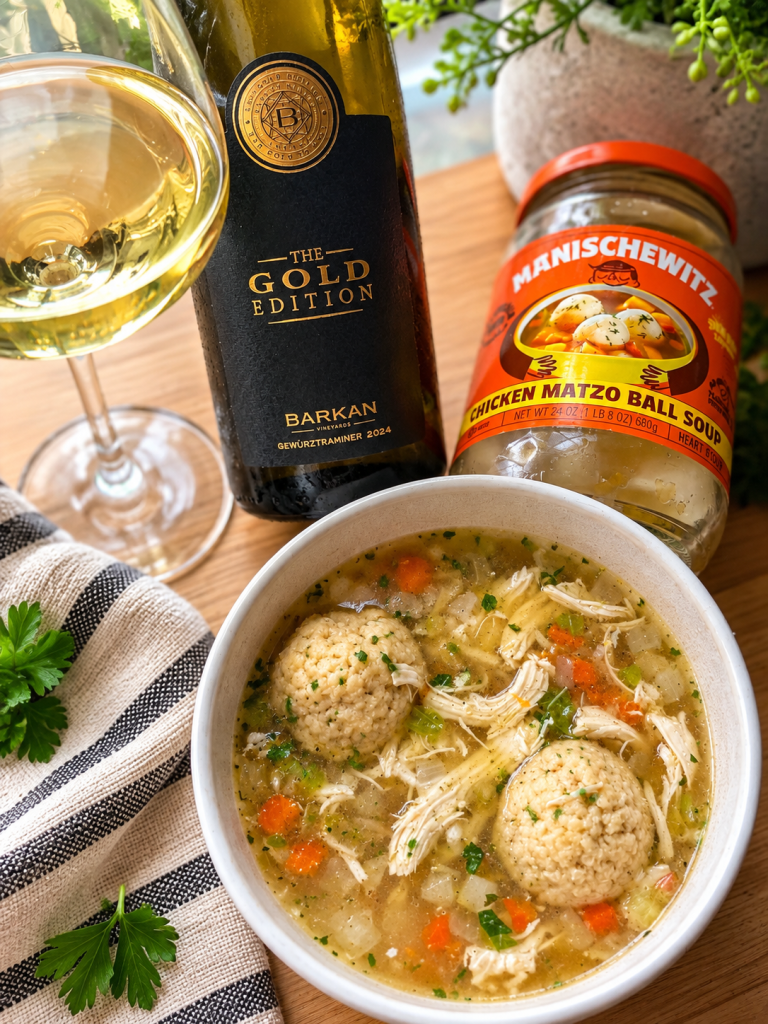
I started with the Manischewitz matzo ball soup and decided to dress it up while still allowing the flavor of the soup itself to shine.
I added shredded chicken and a classic mirepoix blend of carrots, celery and onion. It made the soup feel a little heartier and more homemade without requiring hours at the stove. This is exactly the kind of shortcut I love during a holiday, because you’re adding fresh ingredients and your own personality without creating extra work simply for the sake of creating extra work.
Three Ways to Dress Up Matzo Ball Soup
1. Chicken + Mirepoix
This is what I did. Add shredded chicken along with sautéed or softened carrots, celery and onion for an easy, comforting bowl.
2. Fresh Herb Finish
Keep the soup simple and finish each bowl with fresh dill, parsley or both. A little fresh herb can completely brighten a rich broth.
3. Lemon + Greens
Add a squeeze of fresh lemon just before serving along with spinach or another tender green. It gives the soup a fresh, vibrant edge without overpowering those classic flavors.
Egg Noodles: From Traditional Comfort to Lemon Feta Pasta
The egg noodles are getting their moment next.
For my holiday meal, I’m turning the Manischewitz egg noodles into a lemon feta pasta. I love the idea of taking something traditional and familiar and giving it a Mediterranean-inspired twist.
I’ll toss the noodles with olive oil, fresh lemon juice and zest, crumbled feta and herbs, then finish the dish with just a touch of honey. You still have that symbolic sweetness for the New Year, but balanced by salty feta, citrus and good olive oil.
Three Ways to Use the Egg Noodles
1. Lemon Feta Noodles
Toss warm noodles with extra virgin olive oil, lemon zest, lemon juice, feta and fresh herbs. Finish with a very light drizzle of honey.
2. Sweet Apple & Cinnamon Noodles
Go in a sweeter direction with sautéed apples, cinnamon, honey and toasted walnuts or pecans. It brings some of Rosh Hashanah’s most recognizable flavors together in one dish.
3. Savory Mushroom & Onion Noodles
Caramelize onions and mushrooms, toss them with the noodles and finish with fresh parsley. This would be especially delicious alongside brisket or roasted chicken.
Tzimmes Sweet Spiced Carrots: The Side Dish I Couldn’t Stop Eating
Next came the Tzimi’s sweet spiced carrots, and Manischewitz describes these as a little addicting.
I’m not going to lie… they are.
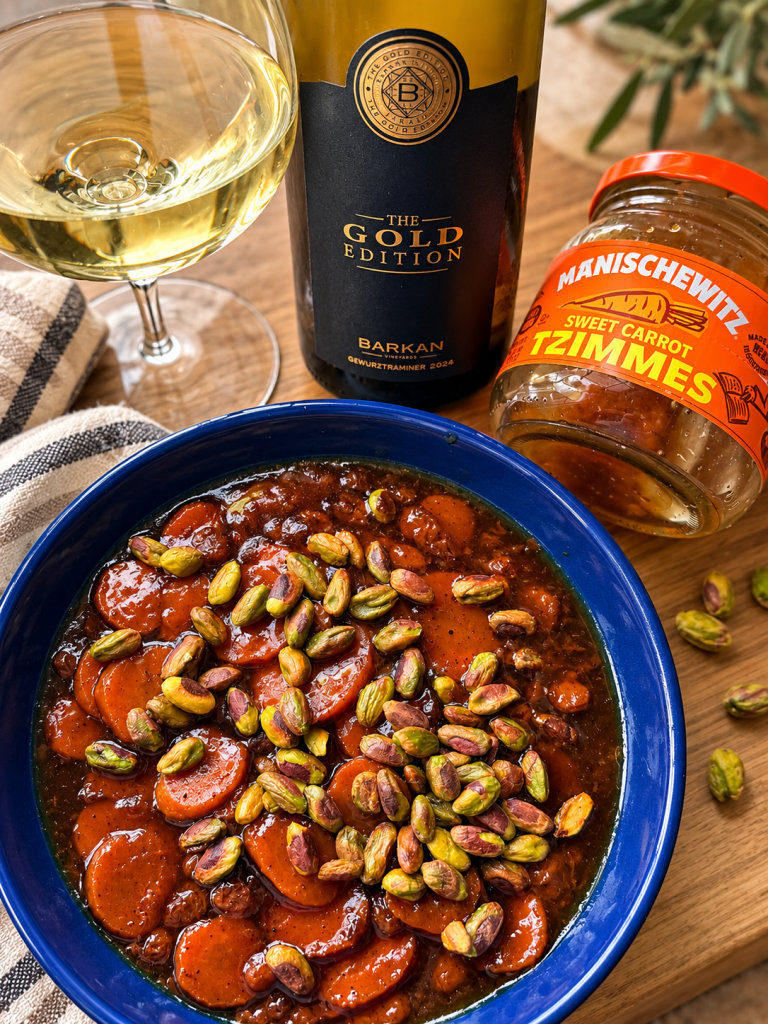
They’re sweet, warmly spiced and incredibly easy to serve alongside the rest of a holiday meal. I added toasted pistachios, which brought in crunch, nuttiness and a beautiful contrast to the soft, sweet carrots.
It was such a simple addition, but it completely elevated the dish.
Three Ways to Serve the Sweet Carrots
1. Toasted Pistachios
My version. Warm the carrots and finish them with roughly chopped toasted pistachios. Simple and SO good.
2. Fresh Herbs + Citrus
Add parsley or mint and a little orange zest to brighten the sweetness and spice.
3. Make Them a Holiday Side
Serve the carrots alongside roasted chicken or brisket and finish with toasted nuts and a light drizzle of honey for an even more festive presentation.
And Then There’s the Honey…
Honey might be the easiest ingredient in the box to use because a little can find its way into nearly every course.
Three Ways to Use Honey for Rosh Hashanah
1. Apples + Honey
Keep it classic. Slice crisp apples and serve them with honey for dipping as a simple nod to the traditional wish for a sweet New Year.
2. Honey Glazed Vegetables
Whisk honey with olive oil, salt and a little citrus, then use it to glaze roasted carrots, squash or sweet potatoes.
3. Honey Wine Drizzle
For an adult holiday treat, simmer a little honey with a splash of aromatic white wine until just combined and use a small drizzle over baked apples, pears or even a simple cake.
Of Course, I Had to Add the Wine
As a sommelier, you know I wasn’t setting this table without thinking about what should be in the glass.
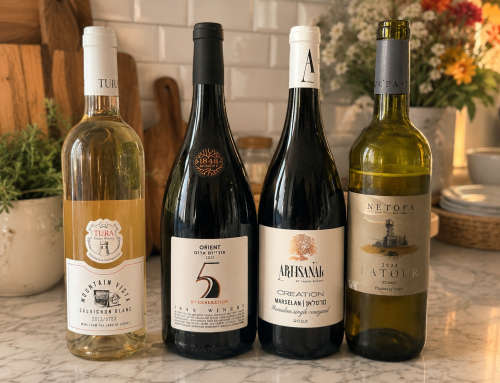
I paired the meal with a Barkan Gewürztraminer, and this style of wine makes so much sense alongside these flavors, and you know I absolutely am obsessed with Israeli Wines!
Gewürztraminer is beautifully aromatic, often showing floral notes alongside ripe stone fruit, citrus and spice. Those aromatics work wonderfully with sweet spices and carrots, while the fruit profile complements the sweeter elements on a Rosh Hashanah table.
And tomorrow, I’ll be pouring the rest alongside those lemon feta egg noodles. The aromatic fruit against the salty feta and bright lemon should be such a fun pairing, especially with that tiny finishing drizzle of honey tying everything back to the holiday.
A Table Filled With Meaning
What I enjoyed most about this box from Manischewitz was discovering just how much meaning can be sitting inside seemingly simple ingredients.
A bowl of soup becomes something shared and comforting. Carrots can represent abundance. Honey becomes a wish for sweetness in the year ahead. Even familiar egg noodles can become the foundation for something new while still having a place at a table rooted in tradition.
And that’s something I think anyone who loves food can appreciate.
Food isn’t only about what tastes good. It’s about memory, family, symbolism, celebration and the stories we continue telling around the table.
So here’s to good food, full glasses, meaningful traditions and, most importantly, a sweet New Year.
Shanah Tovah!
Thank you to Manischewitz for sending this beautiful Rosh Hashanah box and giving me the opportunity to explore these foods, traditions and flavors in my own kitchen.


Leave A Comment